


How to sell on eMAG Marketplace? Romania, Hungary and Bulgaria: a step-by-step guide
The eMAG Marketplace enables Polish companies to sell in three key markets in Central and Eastern Europe: Romania, Hungary and Bulgaria. For sellers, this means the opportunity to expand their international sales within a single ecosystem, but simply setting up an account is not enough. You need to prepare your company’s documents, a product catalogue, correct prices, localised versions of your offers, logistics and a method for synchronising stock levels.
The biggest advantage of eMAG is the ability to utilise the Cross-Border model. Sellers can expand their sales into new countries without having to build separate processes from scratch for each market. In practice, however, they still need to assess product profitability, delivery costs, competition and price levels in Romania, Hungary and Bulgaria on a case-by-case basis.
Comment from a bTOP expert
eMAG should be treated as a regional project. First, we need to get the core market up and running properly, organise the product catalogue, prices and logistics, and only then scale up sales to other countries. The most problems arise when a seller tries to launch three markets simultaneously without a prepared data structure and margin control.
What is eMAG Marketplace?
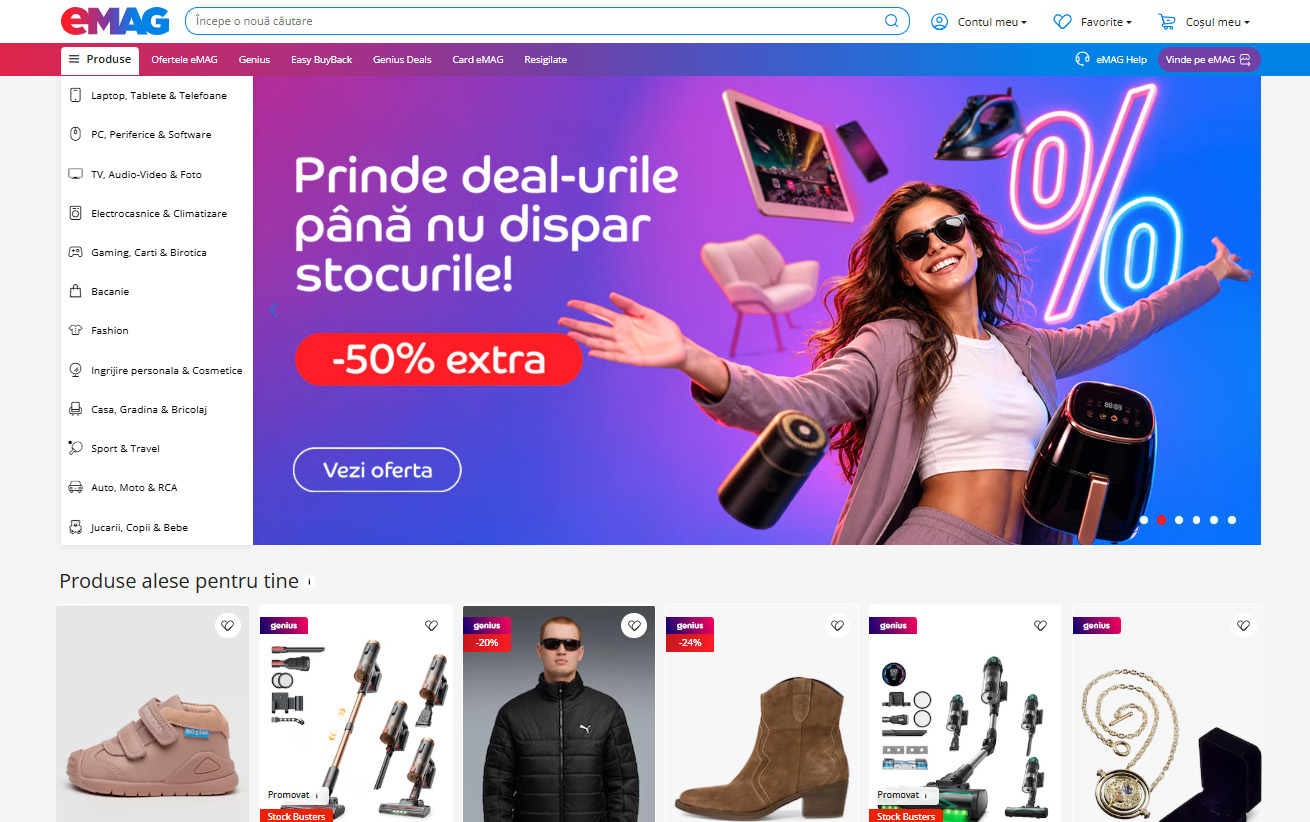
eMAG is a marketplace platform operating in Central and Eastern Europe. Third-party sellers can list their products alongside eMAG’s own range and reach customers using the local versions of the website. For Polish companies, the most important sites are eMAG.ro, eMAG.hu and eMAG.bg.
- eMAG.ro – Romania, eMAG’s largest and most developed market.
- eMAG.hu – Hungary, a separate market with its own currency, prices and competition.
- eMAG.bg – Bulgaria, the next market available under the Cross-Border model.
Cross-Border allows you to centralise some aspects of offer management, but this does not mean that all three countries should be managed in exactly the same way. The same product may have a different minimum price, a different category appeal and different delivery costs in each country.
Who would benefit from selling on eMAG?
eMAG is particularly attractive to companies wishing to enter the Central and Eastern European markets without having to set up their own online shop and a full sales infrastructure in every country. Companies that are best prepared are those with well-organised product data, EAN codes, photographs, up-to-date stock levels and the capacity to handle international orders efficiently.
- manufacturers and importers with an extensive product range,
- sellers who already have experience on Allegro, Amazon or other marketplaces,
- companies ready to localise content into Romanian, Hungarian and Bulgarian,
- retailers with integration with an ERP system, BaseLinker or another synchronisation tool,
- companies that are able to calculate profitability separately for each market.
How do I start selling on eMAG Marketplace?
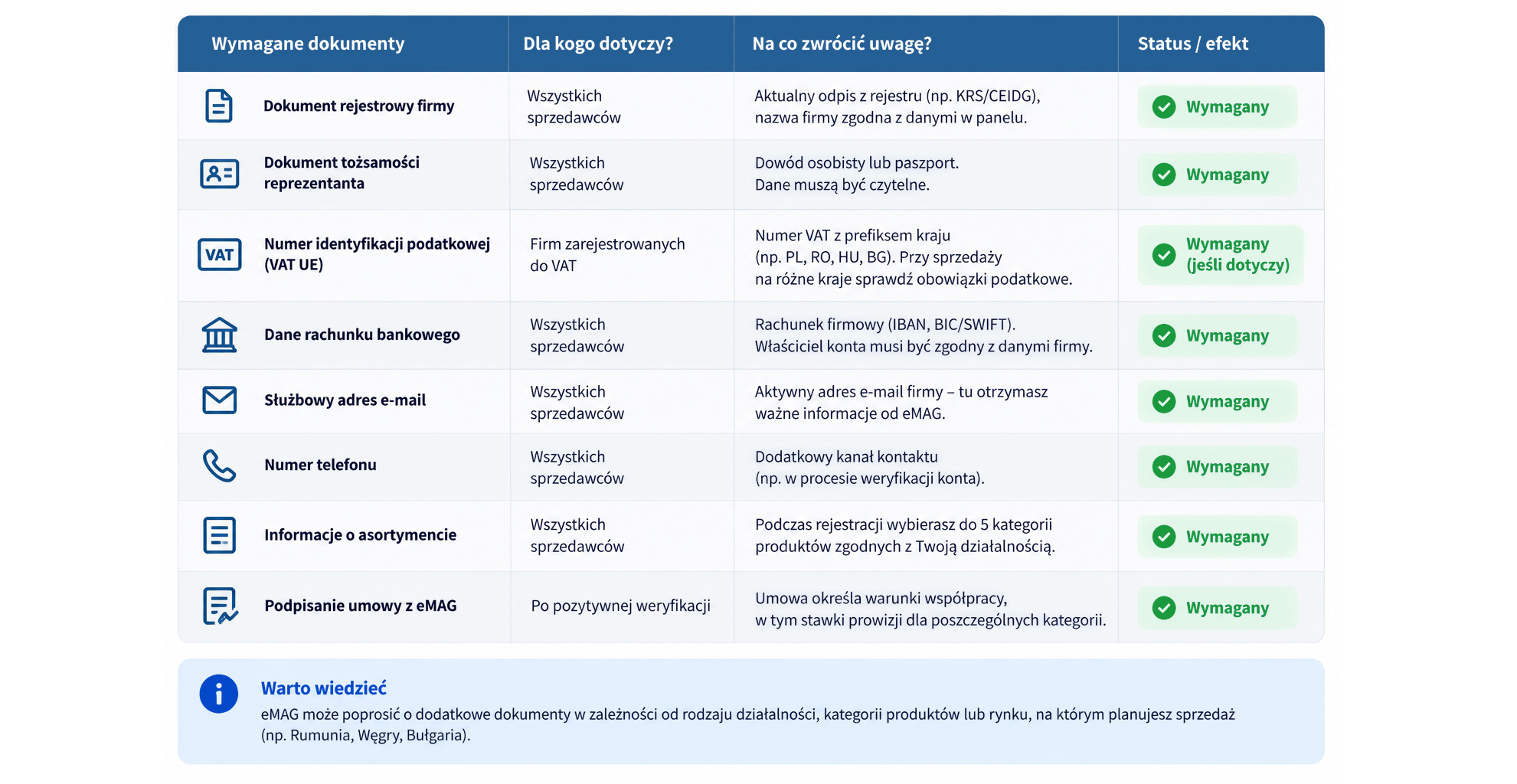
Registration on eMAG involves verifying the company and preparing the information required for sales. The platform requires details of the company, its representative, its bank account and documents confirming its business activities.
- Create a seller account and enter your company details.
- Please submit the required registration documents and the representative’s details.
- Please enter the bank details required for payments.
- Please select the product categories in which you plan to sell.
- Prepare the first products, prices and stock levels.
- Set up delivery and order fulfilment terms.
- Once the underlying market has been activated, prepare to expand sales using the cross-border model.
Important
The range of documents and terms and conditions may vary depending on the country in which the company is registered and eMAG’s current procedures. Before implementation, it is advisable to check the current requirements in the seller’s dashboard and the documents provided during onboarding.
What information is required to list products?
A listing on eMAG consists of product identification details and commercial information. In practice, the seller should have the following information ready, at a minimum: EAN, SKU, product name, brand, category, description, specifications, photos, price, stock levels and delivery time. Key elements of a product listing
- EAN/GTIN – a product identifier used to recognise and link cards.
- SKU – an internal identifier used by the retailer, required for managing product listings and integration.
- Brand and category – these must correspond to the actual product.
- Title – this should clearly indicate what the customer is buying.
- Parameters – essential for filtering, comparing and correctly assigning a product.
- Description – should answer questions about the product’s intended use, features and contents of the set.
- Photographs – must show the correct version and the product’s key features.
- Price and stock levels – these need to be synchronised regularly with the warehouse and the sales system.
bTOP work experience
If a product does not appear correctly in the shop, we first check the catalogue details, category assignment, required parameters and publication status. Only then do we look for the problem on the integration side.
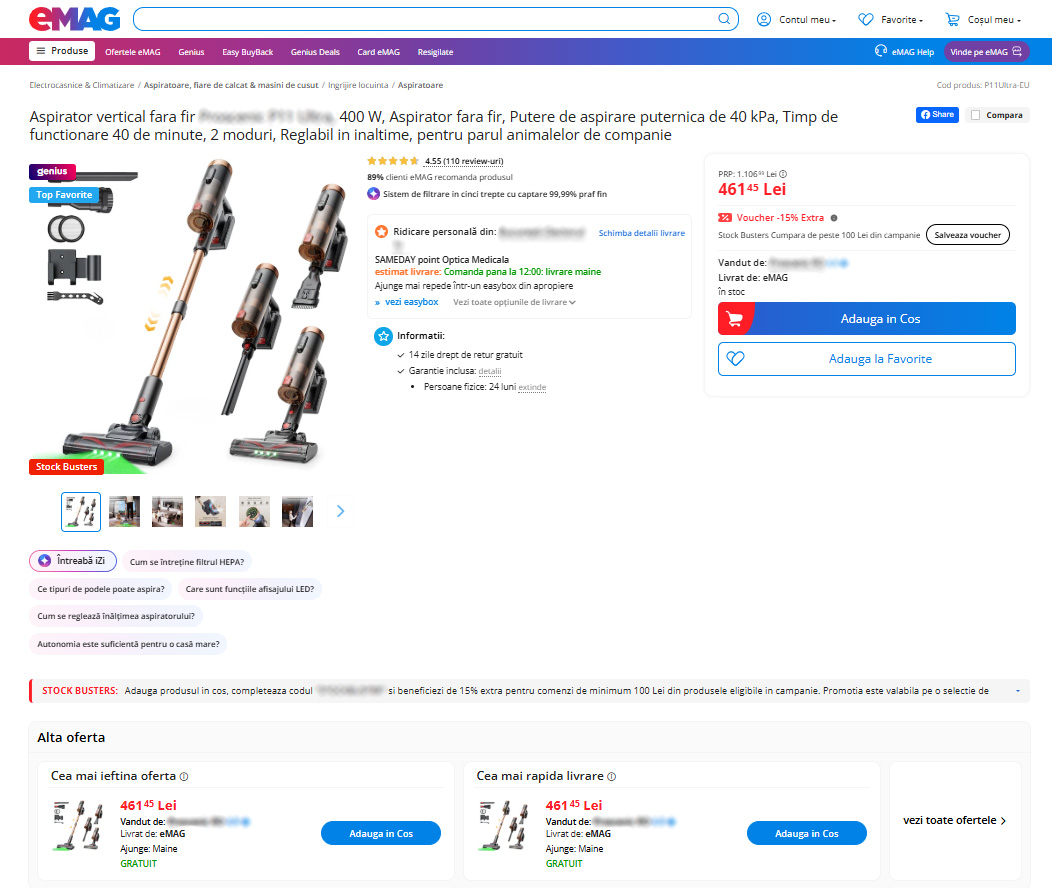
Cross-Border is designed to help expand sales from one eMAG market into other countries. Sellers do not need to build all their processes from scratch, as some data, prices and stock levels can be managed within a shared ecosystem. The platform also provides tools to support product translation and the export of listings.
However, before launching another market, it is necessary to check the following:
- Does the product have a sufficient profit margin after taking into account commission and transport costs,
- Is the price competitive in the local market,
- Is the translation of the name, description and specifications correct,
- Does the selected category correspond to the local directory,
- Are delivery and returns possible within a reasonable timeframe,
- Are stock levels synchronised across all active markets?.
How does eMAG Cross-Border work?
Do we need to develop new products specifically for Hungary and Bulgaria?
Not always. If a product is eligible for cross-border export, part of the process may be automated. However, one should not assume that automated export means there is no checks. Once published, you must check the product page from the customer’s perspective, particularly the title, the translation of the specifications, the variants, the price and the delivery information.
How do you put together a good offer on eMAG?
1. Product title
The title should clearly describe the product and include information that helps the customer identify the variant. It is not worth copying overloaded titles from other platforms. The most important elements are the product name, a key feature, the variant, size, capacity or colour – depending on the category.
2. Specifications
Parameters are not only responsible for the information displayed on the product page. They also form the basis for filtering and assigning products to the correct catalogue structure. Therefore, before carrying out a large-scale import, it is advisable to prepare a parameter mapping between the ERP system, the online shop or the integration provider and eMAG’s requirements.
3. Photographs
The main image should clearly show the entire product and the correct variant. Additional images should show details, scale, how to use the product, what’s included in the set and the key features. In the category section, a well-designed layout can enhance the appeal of the listing, but should not make it difficult to identify the product.
4. Description
The description should answer specific questions: what the product is, what it is used for, where it can be used, what its features are, and what the customer receives. General marketing text is no substitute for technical specifications or parameters.
5. Content localisation
Selling in three markets requires content in the local language. Automatic translations speed up the process, but for key products it is worth manually checking the name, units, variants and technical terminology. An error in the translation of a specification can be more damaging than a less detailed description.
A bTOP specialist for eMAG replies
First, we refine the data; then we boost traffic. Advertising won’t fix uncompetitive prices, poor-quality photos, missing specifications or excessively long delivery times. A well-prepared product listing is the foundation for further scaling.
Why might a listing be active but not generating any sales?
- the price is higher than that of local competitors,
- the delivery cost is disproportionate to the value of the product,
- the product has incomplete specifications or is in the wrong category,
- the translation is imprecise,
- The main photo doesn’t show the product very well,
- the delivery time is too long,
- the product is not covered by the relevant promotion or advert,
- Stock levels are low or often drop to zero.
How much does it cost to sell on eMAG Marketplace?
eMAG’s cost model is based primarily on a commission on sales. The commission rate depends on the category and the terms and conditions applicable to the seller. Therefore, before launching a larger product range, you should check the current fee schedule in the eMAG documentation and calculate the profitability for specific products.
The calculation should include not only commissions, but also:
- postage costs to Romania, Hungary or Bulgaria,
- the cost of processing returns,
- the cost of packaging and order fulfilment,
- the cost of data integration and synchronisation,
- the cost of eMAG Ads,
- the cost of any fulfilment,
- VAT and the impact of exchange rates,
- the margin remaining after all charges have been deducted.
According to a bTOP specialist
We do not compare markets solely on the basis of commission rates. The same SKU may be profitable in Romania but unprofitable in Hungary if the shipping costs, local retail price or level of competition differ. Therefore, minimum prices should be calculated separately for RO, HU and BG.
Logistics, delivery and returns
Before launching sales, you need to establish exactly where the goods will be dispatched from, what the realistic delivery times will be, and where the customer should send returns. Overly optimistic delivery times can quickly lead to problems with order fulfilment and your account rating.
- determine a realistic timeframe for preparing the parcel,
- check the transport costs for each market,
- plan the returns and complaints process,
- synchronise stock levels across all channels,
- Do not advertise products where stock levels are unpredictable.
Fulfilment by eMAG and Genius easybox
eMAG is developing its own logistics solutions, including Fulfilment by eMAG. Under the fulfilment model, some of the warehousing and dispatch processes can be outsourced to the platform operator. This solution can simplify order processing, but before implementing it, you need to compare the costs with those of your own logistics and check the rules applicable to the relevant market.
The second key element of the ecosystem is delivery to the easybox network and the Genius programme. For some customers, the option of fast and convenient delivery to a vending machine may be a factor when choosing a deal, so it is worth checking which products and terms of sale are eligible for these programmes.
How can I promote products via eMAG Ads?
eMAG has its own advertising system based on a pay-per-click model. Sellers can promote selected products and increase their visibility on the website. However, campaigns should not be automatically launched across the entire catalogue.
Before launching an advert, it’s worth checking:
- the product’s margin after all costs,
- the current price compared with the competition,
- stock levels and the ability to maintain availability,
- the quality of the product card,
- cost per click and maximum acceptable cost per sale,
- results broken down by Romania, Hungary and Bulgaria.
bTOP Internship – eMAG Ads
The most common mistake is advertising products that aren’t yet ready for sale. First, we refine the offering and improve profitability; only then do we introduce paid traffic. Otherwise, the campaign simply generates costs more quickly.
The most common mistakes made by Polish salespeople
- The same price across all markets – with no separate cost calculations or competition.
- Export the entire catalogue without selecting any products.
- No checks on machine translations.
- Incomplete parameters and incorrect category assignment.
- Inconsistencies in stock levels.
- Delivery times are too long compared to local competitors.
- Advertising products with low profit margins or poor availability.
- No checks are carried out on the actual appearance of the product page after publication.
Which eMAG marketplace is the best place to start?
For many Polish retailers, Romania is the natural first step, as it is the largest market within the eMAG ecosystem. However, this does not mean that a company should publish its entire catalogue straight away. A safer approach is to start with a limited range of products, test the entire process, and only then scale up.
- Choose products with good profit margins and straightforward logistics.
- Prepare comprehensive data and localised content.
- Launch sales on the primary market.
- Check the visibility of your listings, deliveries, returns and profitability.
- Expand your sales into Hungary and Bulgaria.
- Only scale the directory once the processes have stabilised.
Is it worth selling on eMAG Marketplace?
Yes, if a company wishes to expand its sales in Central and Eastern Europe and is prepared to manage several markets simultaneously. eMAG offers the opportunity to enter the Romanian, Hungarian and Bulgarian markets, but achieving good results requires regular monitoring of prices, product data, stock levels, logistics and advertising campaigns.
Summary by a bTOP expert
The best results are achieved when the three markets are managed jointly from an operational perspective, but separately from a commercial perspective. The product catalogue and stock levels can be synchronised, whilst prices, advertising, margins and product selection must be analysed separately for Romania, Hungary and Bulgaria.
Summary
Selling on the eMAG Marketplace can be a good way to grow sales in Romania, Hungary and Bulgaria, but it requires proper preparation of the product catalogue, pricing, logistics and order fulfilment processes. Particularly when it comes to cross-border sales, it is important to regularly monitor listings, stock levels and profitability in each market individually.
At bTOP, we provide a comprehensive sales service on the eMAG Marketplace. We assist with account registration, the preparation and publication of listings, the integration of stock levels and prices, the launch of new cross-border markets, catalogue optimisation and the management of eMAG Ads campaigns.
Whether you’re already selling on eMAG and want to improve your results, or are just planning to enter the Romanian, Hungarian or Bulgarian markets, Let’s talk about your products and opportunities for sales growth. We’ll show you where to start and what level of support makes sense.
Author: Specialist in. Marketplace – Krzysztof Kryś
Date of publication: 13 October 2026.
 Polish
 English
 German
 Czech
 Hungarian
 Slovak
