


How do you sell on OTTO Market from Poland? A bTOP expert explains
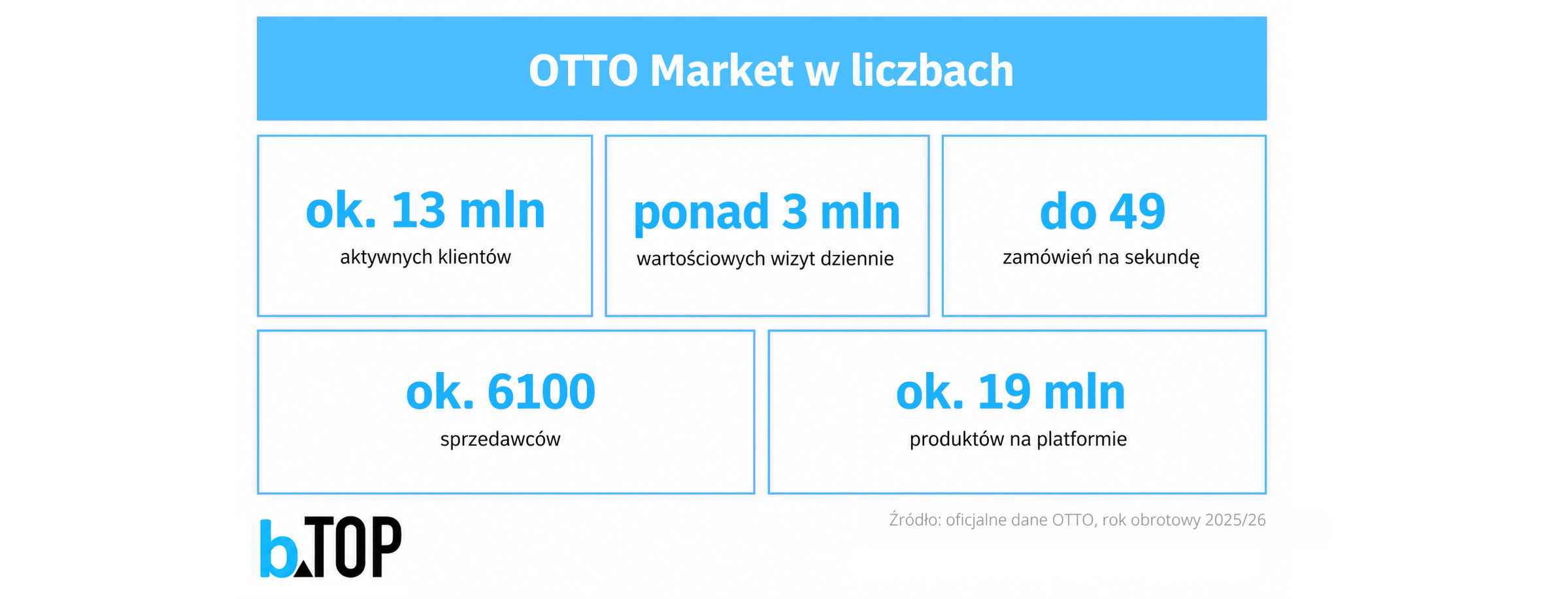
OTTO Market enables Polish manufacturers, brands and distributors to reach millions of customers in Germany. However, this is not a marketplace where you can simply copy a catalogue from another platform automatically. OTTO assesses applications on a case-by-case basis, and selling on the platform requires the company to be prepared, with product data, logistics and German-speaking customer service in place.
Kacper Pawlak, Specialist in. Marketplace in bTOP, explains who the platform is for, how the registration process works, and what costs and requirements need to be taken into account.
bTOP as OTTO Market Service Partner It supports sellers in preparing to launch on the marketplace, integrating with it and managing their sales thereafter.
Who would benefit from selling on OTTO Market?
OTTO Market is worth considering as long-term expansion channel into the German market. Companies with a competitive product range, a well-organised catalogue and established logistics have the greatest potential. The platform offers, amongst other things, fashion and footwear, homeware, furniture, electronics, household appliances, sports equipment, cosmetics, pet products and food with a long shelf life. You should always check the detailed range of categories and current rates before applying.
The mere presence of a product in a supported category does not necessarily mean that entering that category will be profitable. Before applying, it is worth compare the final price with the offers available in Germany, calculate the margin after commission and logistics costs, and to assess whether the catalogue can be properly produced in German. Product availability, the quality of photographs, brand recognition and the efficiency of after-sales service are also important factors. OTTO is a curated marketplace, which is why the platform assesses not only the company, but also product range optimisation.
A full overview of the product range and commission rates is published by OTTO Market.
What requirements must a Polish company meet?
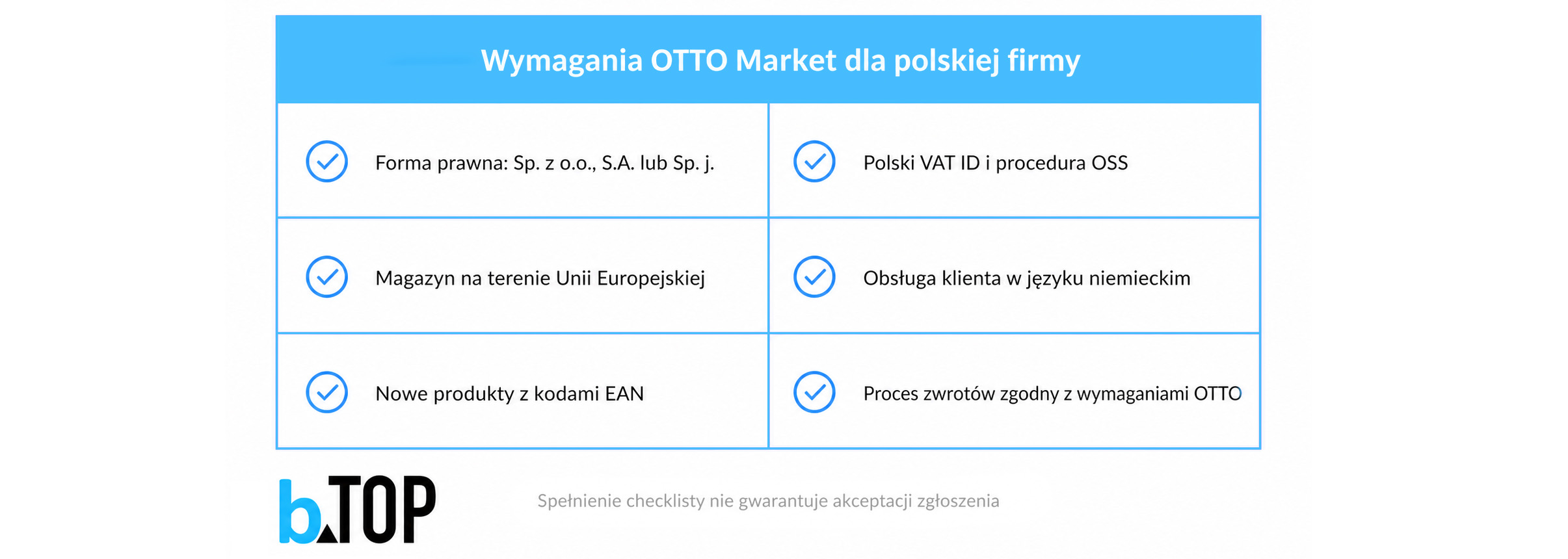
At the time of publication, entities such as limited liability companies, public limited companies and general partnerships may submit applications from Poland. The company must hold a Polish VAT number, participate in the OSS procedure, dispatch goods from a warehouse within the European Union, provide customer service in German and offer new products with EAN codes. Meeting these requirements enables the company to submit an application, but does not guarantee that it will be accepted.
How do I start selling on OTTO Market?
The process begins with an assessment of the requirements and the potential of the product range. The company then submits an application. Following a positive assessment, it is granted access to OTTO Partner Connect, approves contracts and forwards documents for verification. The subsequent stages include setting up logistics, preparing products, integration and testing the ordering process.
Company documents should include consistent data: legal name, address, VAT number and details of authorised representatives. Discrepancies between the form and the supporting documents may extend the verification process. At the same time, you should choose a method for submitting product data and orders, set up a dispatch profile and establish a returns procedure. It is best to launch the catalogue in stages: starting with a group of correctly prepared products, followed by status checks and a test order, and then gradually expanding the product range.
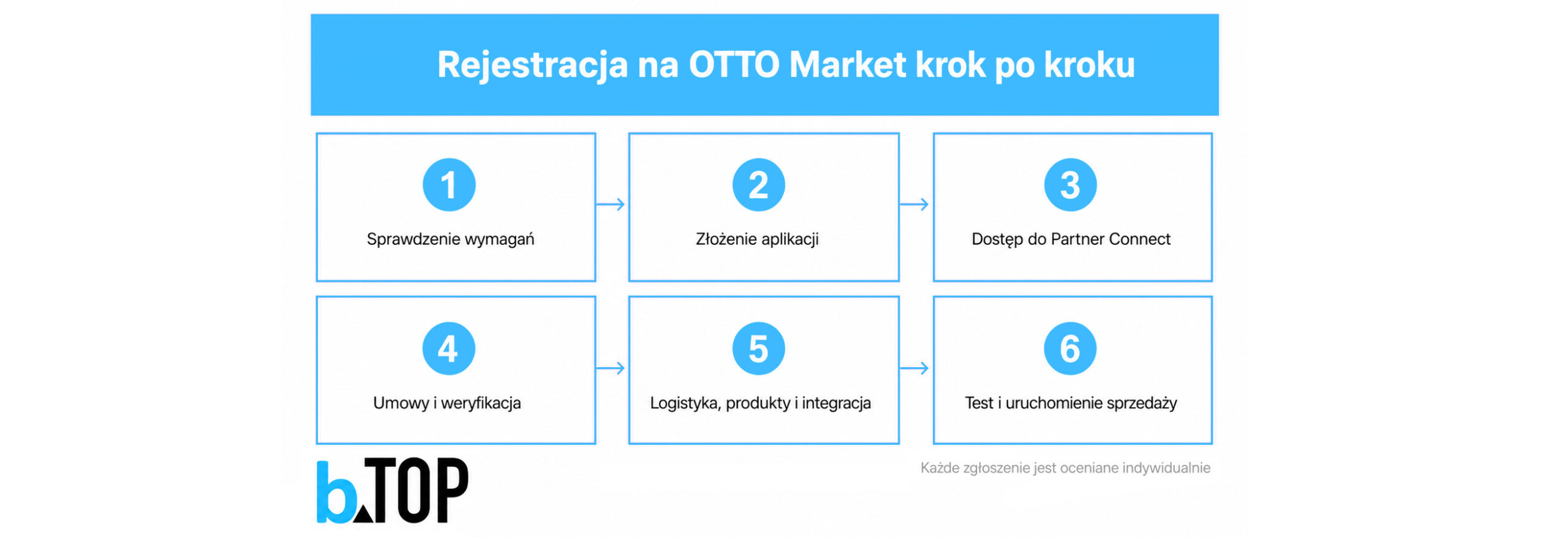
Current terms and conditions and application form are available at on the website for Polish sellers on OTTO Market. Each company is assessed on a case-by-case basis including in terms of tailoring the product range.
How can you assess sales potential before registration?
It is worth starting the analysis with a small, representative sample of the catalogue. For the selected products, you should check the category, price competition, potential commission, delivery and returns costs, and the availability of the data required by OTTO. This allows you to calculate the actual margin and assess whether the product’s competitive advantage stems from its price, brand, quality, design or availability.
The next step is assessment of operational scale. The company should know how many SKUs it intends to launch, how often prices and stock levels change, who will prepare the German-language content, and who will handle customer service. If these elements do not have designated owners and deadlines, simply having access to the account will not ensure a smooth launch. A well-prepared plan involves a pilot phase first, followed by the full launch of the catalogue only after the pilot has been evaluated.
How much does it cost to sell on OTTO Market?
A seller’s account costs 99.90 euros plus VAT per month. On top of that, there is commission depending on the category, and sometimes also on the product price. The rates published by OTTO include a payment processing fee of 2.7%. The commission is calculated on the basis of the gross selling price and the gross delivery costs.
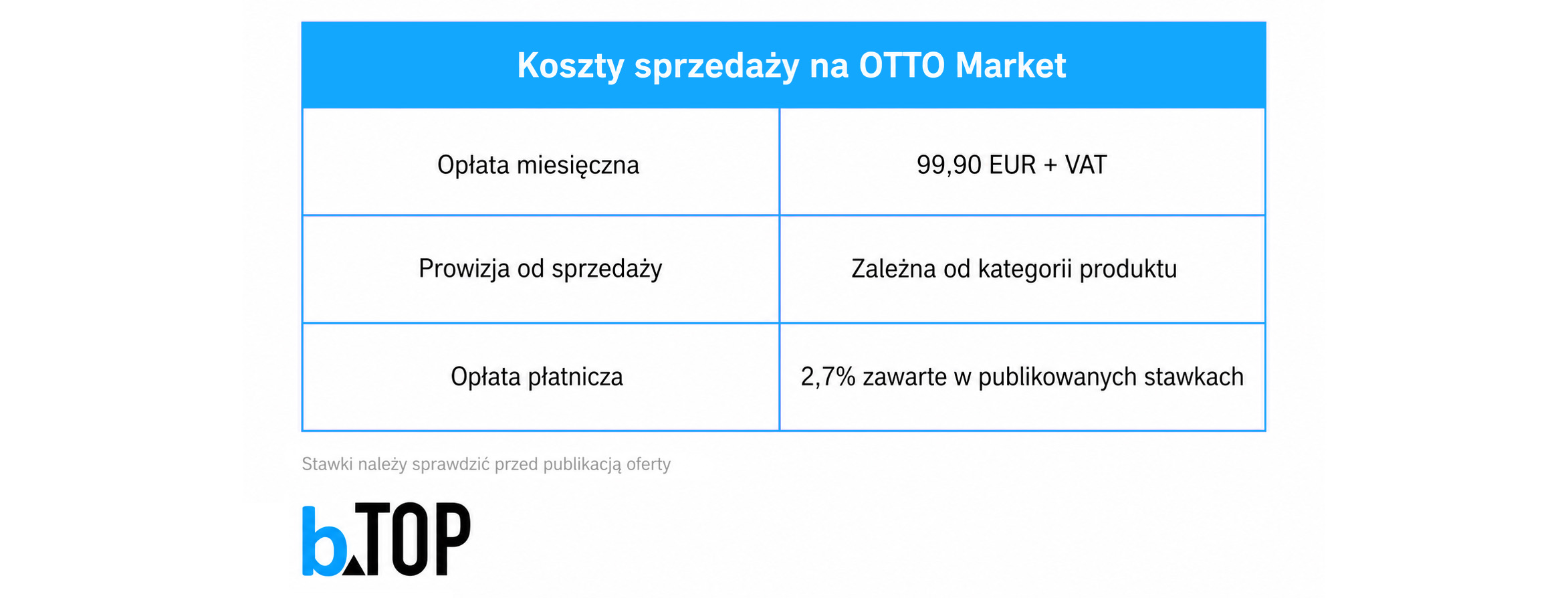
When calculating profitability, one must also take into account transport to Germany, returns, the preparation of German product content, integration, customer service and promotional activities. Please check the current rate for the specific category before publishing the offer.
Logistics and returns on OTTO Market
Magazine doesn't have to be located in Germany – delivery can also be arranged from Poland or another EU country. However, the seller must set realistic preparation and delivery times and provide correct parcel tracking numbers.
Returns may be sent to a warehouse in Poland. It is important to bear in mind the carriers’ policies: for returns to selected warehouses outside Germany, OTTO DHL requires. It is worth planning the returns process before onboarding begins.
In practice, you need to combine three elements: current stock levels, the correct dispatch profile and post-purchase support. The customer should receive actual delivery date, and the platform – the current status and tracking number. It is also important to specify who is responsible for communication in German, generating return labels, accepting parcels and processing refunds. A well-defined process minimises delays, cancellations and unnecessary operational costs.
The most common problems when accessing OTTO Market
The first set of problems are formal requirements: an unauthorised legal form, lack of an OSS, inconsistent documents or the absence of a person authorised to validly approve contracts. The second group relates to the catalogue – incorrect EAN codes, missing information in the German data, incorrect categories and photos that do not meet the requirements. The third category covers the following issues: excessively long delivery times, a lack of German-speaking customer service staff, and unaccounted-for returns costs.
The safest way to start is with a readiness audit. This should address four questions:
- Does the company meet the formal requirements?
- Is the product range suitable for the platform?
- Can the product data be mapped correctly?
- Will the margin cover all sales costs?
Only once you have received a positive response should you proceed with the integration and prepare the full catalogue.
How does bTOP help you start selling on OTTO Market?
As OTTO Market Service Partner We help you assess your company’s readiness and product range, organise your requirements, prepare product data in German, map categories and attributes, configure the integration and plan logistics processes. Once your account is up and running, we can also support day-to-day operations and sales optimisation.
Certain tasks must be carried out directly by the seller. This applies, amongst other things, to approval of contracts, the handover of documents corporate and identification a person authorised to represent the company. bTOP’s role is to prepare the company, minimise the risk of errors and ensure the project is carried out efficiently through its various stages.
The scope of support may include input analysis, document checklist, drawing up an implementation plan, preparation of the first batch of tenders, configuration of the connection to the retailer’s system and control over product listings. This provides the brand owner with a single, streamlined process rather than having to deal with administrative, catalogue and technical issues separately.
Frequently asked questions:
- Can a sole trader sell on OTTO Market?
At the time of publication, a sole trader is not included on the list of legal forms permitted for Polish sellers. - Is it necessary to have a warehouse in Germany?
No. Goods may be dispatched from Poland or another EU country, provided the company meets the requirements regarding delivery and returns. - Does meeting the requirements guarantee admission?
No. OTTO assesses each business individually and determines whether its product range is suitable for the platform. - Is customer service in German essential?
Yes. The retailer should provide German-language support for enquiries, orders and after-sales matters. They may organise this in-house or through external support. - How much does a seller account cost?
The monthly fee is 99.90 euros plus VAT. You’ll also need to factor in the commission applicable to the category, as well as the costs of logistics, returns, integration, content and customer service. - Can bTOP handle the entire onboarding process?
bTOP can prepare and coordinate onboarding, the product catalogue, integration and operational processes. However, the seller remains responsible for company documents, the approval of contracts, the compliance of the offer and commercial decisions.
Would you like to start selling on OTTO Market?
Please get in touch with the bTOP team. We will assess your business’s readiness, analyse your product range and advise you on what you need to prepare before submitting your application.
Author: Specialist in. Marketplace – Kacper Pawlak
Date of publication: 3 September 2026.
 Polish
 English
 German
 Czech
 Hungarian
 Slovak
