



How do you sell furniture on BRW Marketplace? A bTOP expert explains
A furniture manufacturer usually has ready-made collections, materials and options. However, the customer sees a single offer and wants to know whether the corner sofa will fit in their living room, when the wardrobe will be delivered, and what is included in the price of the bed. Selling on BRW Marketplace requires translating the manufacturer’s catalogue into such purchasing decisions.
BRW also makes brw.pl available to external manufacturers, distributors and shops. In this guide, Kacper Pawlak, Marketplace Specialist at bTOP, shows how to make the most of this channel: from selecting products to preparing deliveries and handling orders. We pay particular attention to furniture, as product variants and delivery costs often determine the outcome of an order in this sector.
1. BRW Marketplace as a sales channel for the furniture industry
- Reaching an audience interested in homes and interiors: A customer choosing a corner sofa may also be looking for a coffee table, a lamp or a rug. Being in such a setting allows products to be presented in the context of a specific purchasing need.
- An additional channel for brand development: Selling on BRW can complement your own shop and other marketplaces. This is a particularly attractive option for businesses that already have a product catalogue and an efficient order fulfilment process, and wish to expand the reach of their offering.
- A growing marketplace: In its figures for 2025, BRW reports over 330 active sellers, a 65% increase in the number of orders, and a 43% share of the online channel accounted for by the marketplace. These are the platform’s figures for the period in question, not a forecast of the new shop’s results.
2. From sofas to lamps – what sort of range suits brw.pl?
BRW invites manufacturers, distributors and online retailers from the Home & Garden sector. The platform’s range includes home and garden furniture, accessories, lighting, and household appliances and consumer electronics. The specific product range is agreed upon during discussions regarding collaboration.
For a furniture manufacturer, the natural starting point is models with standardised specifications: chests of drawers with fixed dimensions, beds in specific sizes, or corner sofas with clearly specified fabrics. A good test case would be a product for which you can provide a complete set of data, a predictable lead time and the cost of delivery.
However, there is no basis for singling out a single category that guarantees the best sales. When assessing a product’s potential, compare competing offers, the price including delivery, the delivery time and the way it is presented. An attractive collection with a vague description or expensive delivery charges may lose out to a better-prepared offer.
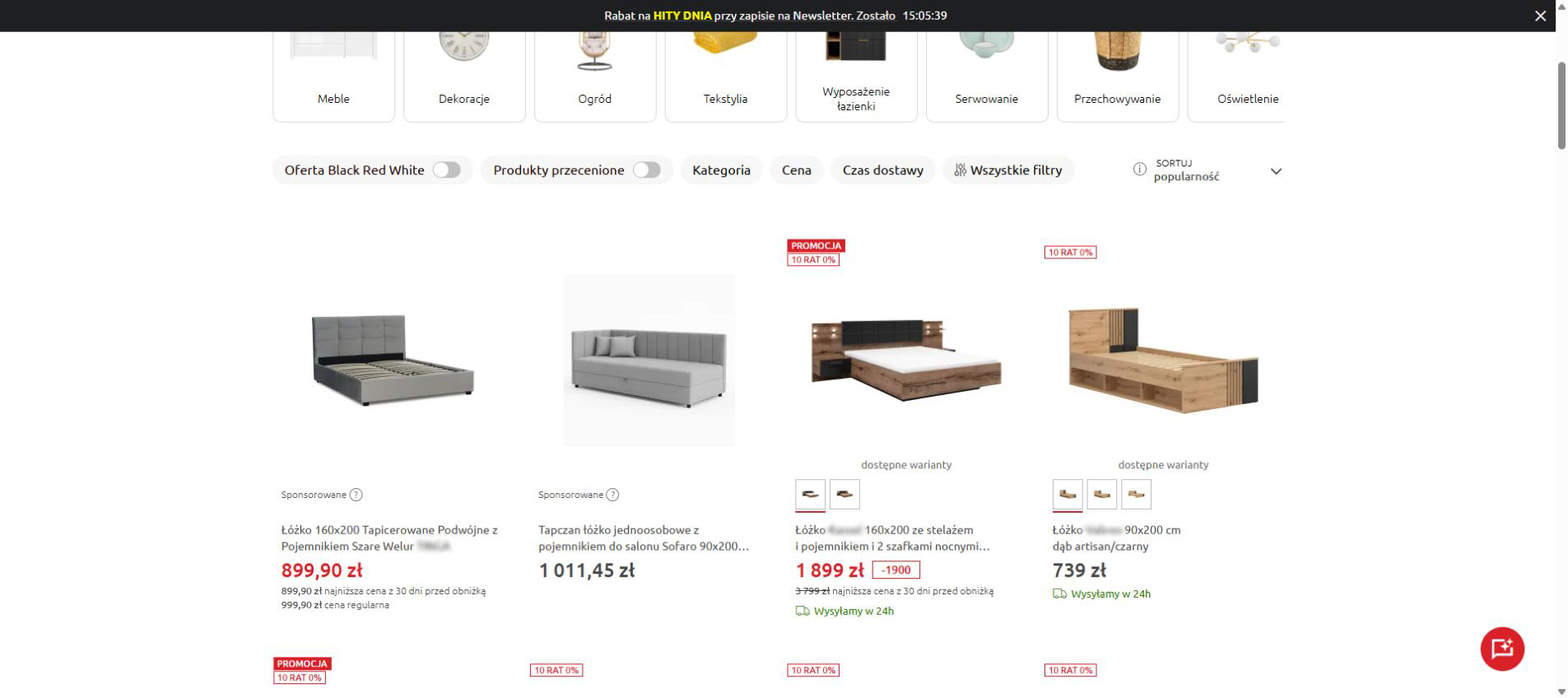
3. Which pieces of furniture should you choose to start with?
To begin with, select a coherent section of your catalogue: products that are in stock, with complete data and predictable delivery costs. Rather than publishing all your collections straight away, test a representative selection of models and variants. Such a pilot scheme will allow you to test the entire process before scaling up.
bTOP expert tip: for furniture, categorise your product range according to how orders are fulfilled. A chair sent in a single parcel, a wardrobe in several boxes and a large corner sofa all require different transport calculations and warehouse preparation. Base your market entry strategy on your company’s actual capabilities.
4. Joining BRW: registering the company and establishing a partnership
To start selling on BRW, you need to register as a seller in the Marketplace section. Simply creating a standard customer account on the site does not activate a seller account. The process can be divided into three stages.
- Registration of a company and its product range
Please provide the shop’s address, product categories, the planned number of listings, and whether you sell outside Poland. Please also prepare a brief company profile and some examples of your products. This will enable the BRW team to assess your proposal and discuss the scope of our collaboration.
- Agreeing the terms of cooperation
Before signing the contract, discuss fees, billing, logistics and customer service. It is worth outlining the delivery model at this stage: dispatch from a warehouse, made-to-order production or fulfilment by a supplier. Also agree on what data and documents need to be provided when setting up the account.
- Setting up your account and your first offers
Once you have agreed on the terms of cooperation, move on to setting up sales, preparing your catalogue and integration. Before you publish a larger batch of items, check a few listings from the buyer’s perspective: photos, variants, price, availability and delivery. The platform decides whether to accept a seller and activate their listings.
- BRW commission and delivery – calculate the total for a specific item of furniture
BRW does not publish the full price list for sellers on the registration page. The commission rate, the method of calculation and any fixed fees are set out in the terms and conditions of the partnership. When calculating costs, include the cost of goods, packaging, transport, integration, promotion and returns processing.
When ordering furniture, work out the total cost for a specific product. Several parcels, an oversize surcharge or return delivery can significantly affect the cost-effectiveness of an order. Also, compare the final price shown to the customer – An attractive price for the furniture alone is not enough if delivery significantly increases the total cost of the order.
- Furniture details on BRW: variant, gallery and delivery promise
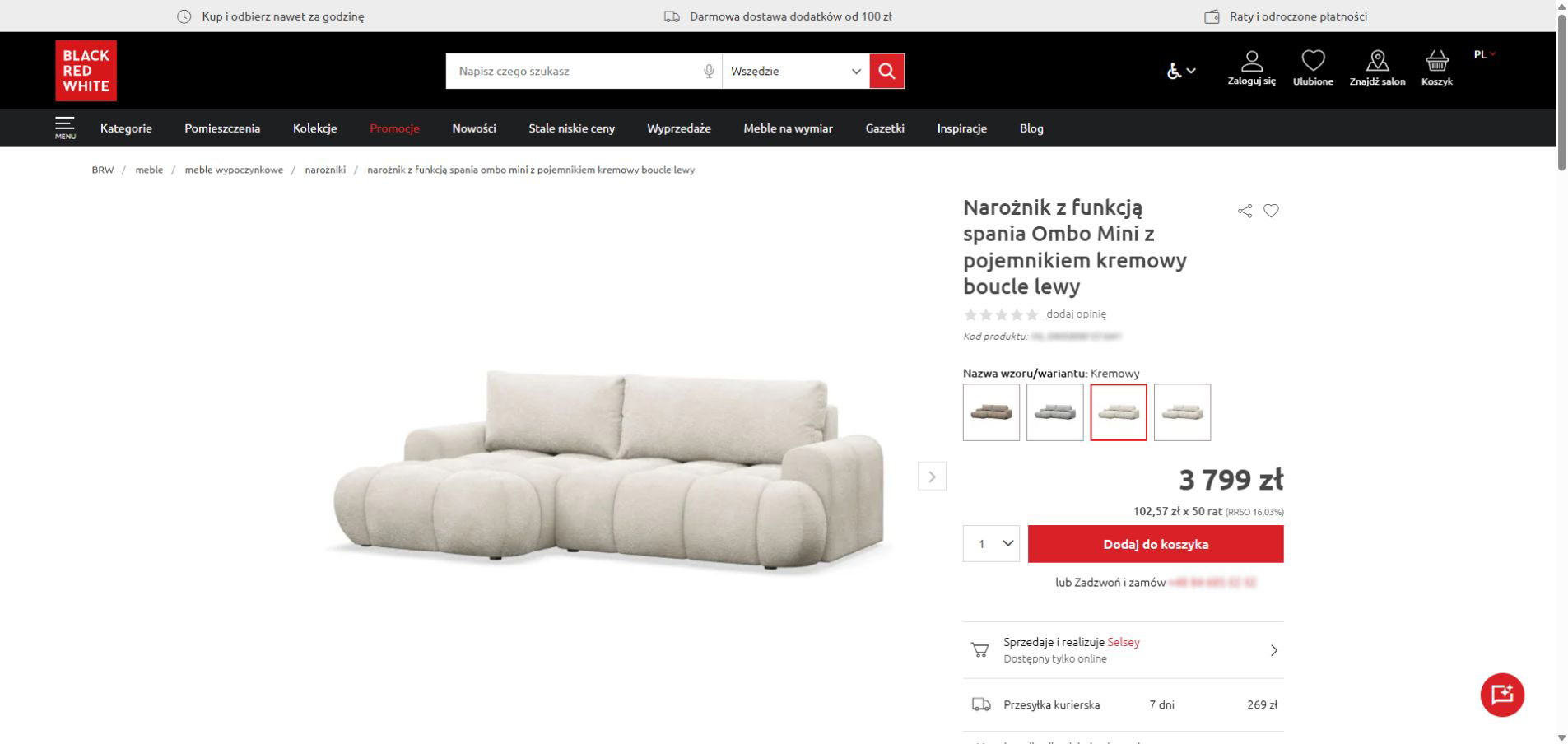
A good furniture listing should help the customer assess the product’s appearance, features and how well it will fit into their home. The title, description, photos and selected variant must all refer to the same model. It is particularly easy to make a mistake when there are different fabrics, sizes and corner configurations.
- A clear title: Specify the type of furniture, the model name and the key features of the variant, e.g. „Corner sofa bed [model], left-hand, beige”. The information should be based on the actual product. The title helps customers recognise the offer; it is not advisable to replace it with promotional slogans alone.
- A gallery showcasing the product: Prepare the main shot, the arrangement, close-ups of the fabric and a rear view. For a fold-out piece of furniture, show the sleeping function and the storage compartment. The photographs should match the chosen colour, fabric and whether it is the left- or right-hand version.
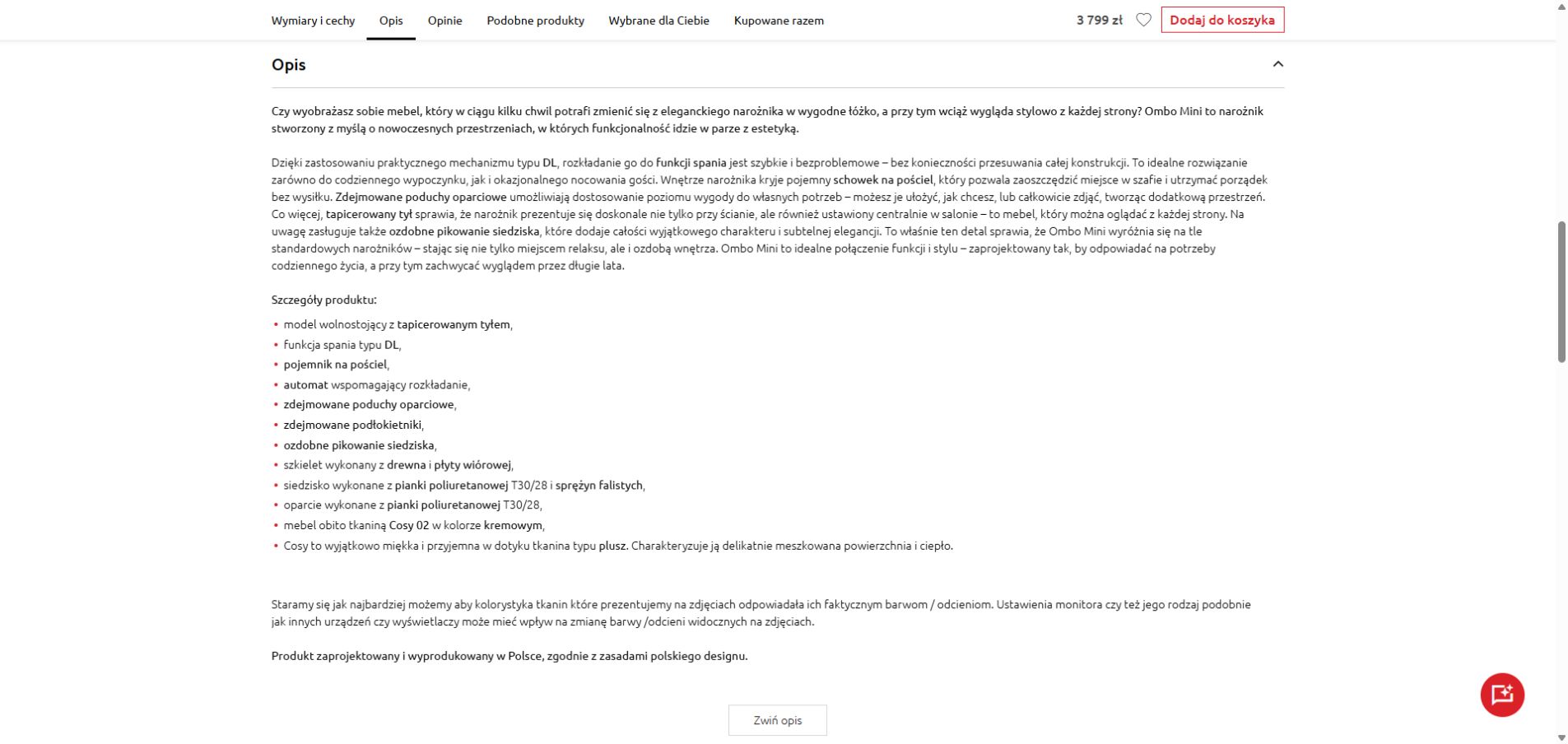
- A description answering the following questions: Please specify the dimensions, materials, assembly instructions, contents of the set and care instructions. For beds, please clarify whether the price includes the mattress and bed base; for corner sofas – sleeping surface and folding mechanism. Describe the features in specific terms, without making unsubstantiated promises.
- Full product details: Organise the identifiers, brand, category and required attributes. Also prepare the manufacturer’s details, safety information and any necessary instructions. BRW provides a separate guide on how to complete the information required by GPSR.
bTOP expert tip: Before importing, compare each product in the catalogue with its photos and documentation. An error in the fabric or corner section assignment may be repeated across multiple listings. Organise the data first, and only then automate the publication process.
5. The furniture catalogue at Mirakl: how can we ensure prices and stock levels are correct?
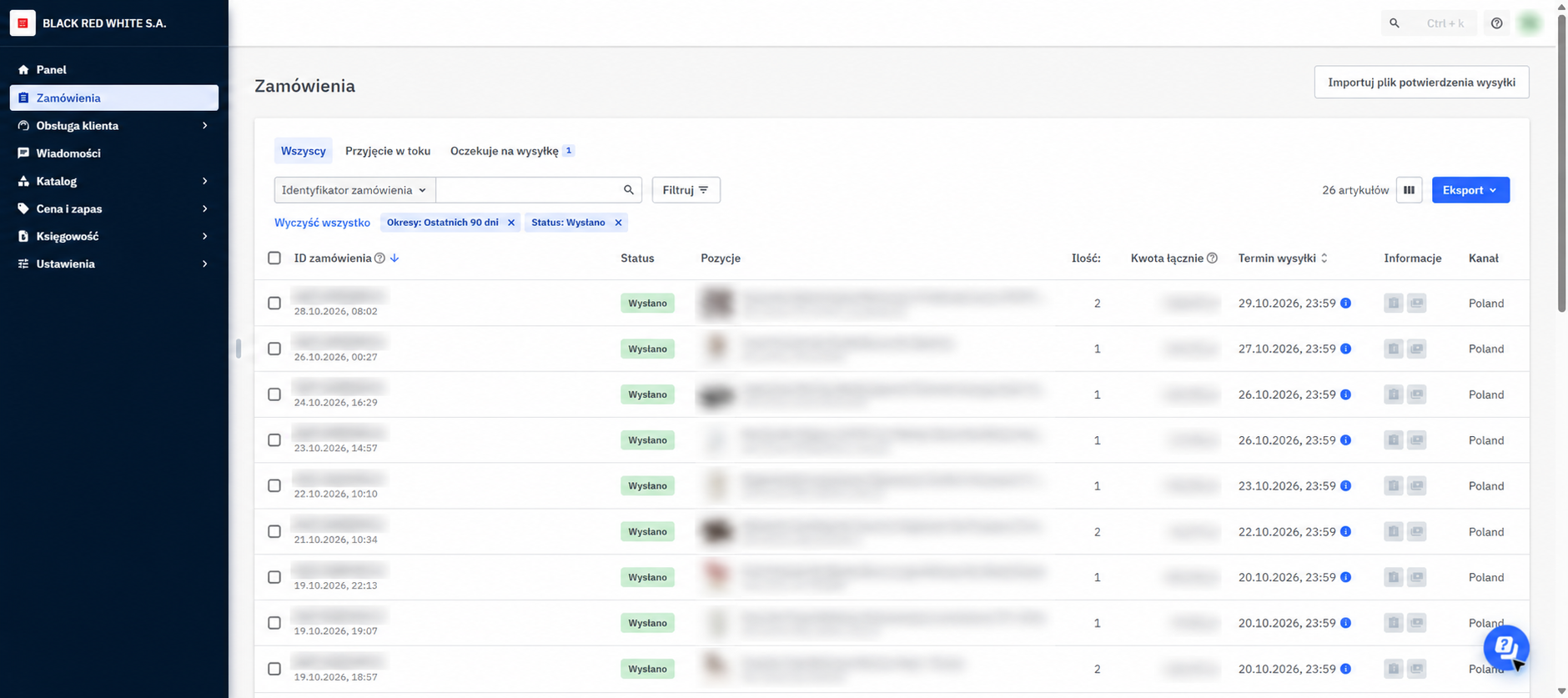
BRW uses Mirakl technology and offers the option of integration via XML, CSV or API. Choose the solution that best suits the system you use to manage your products and stock. With a large number of variants, manually updating each listing quickly becomes unmanageable.
Before implementation, check which functions the chosen integrator supports: catalogue transfer, price and stock updates, order retrieval and the return of dispatch data. Simply connecting to the platform does not mean that all these processes have been configured. You should also determine which system is the primary data source.
6. Delivering a wardrobe is a different process from dispatching a chair
When selling furniture, logistics form part of the service. Customers should know when they will receive the product, how much they will pay for delivery, and whether the service includes carrying the item inside. Ensure this information is in line with your warehouse’s capacity and the terms agreed with the carrier.
- Choice of transport: Check the weight and dimensions of the parcels, the number of items in the order, and whether the corners, fronts and glass have been properly protected. For large pieces of furniture, arrange for transport suitable for their dimensions. Agree on how to communicate this information if the set is being sent in several parcels.
- Realistic completion date: Take into account order fulfilment, packing and collection by the carrier. If the product is only manufactured after an order has been placed, the lead time must also allow for production. A promise of fast delivery should be underpinned by the company’s processes.
- Returns and complaints: Prepare the returns address, customer contact details and the procedure for dealing with damaged or missing items. You should also budget for the cost of return delivery. Your shop’s returns policy must be clearly set out – The customer should not have to guess who is responsible for processing the purchase.
During the pilot phase, work through the entire process with the warehouse team: order receipt, picking of all parcels, dispatch and handling of enquiries. A smooth flow of information helps to avoid situations where a product is available on the website but the company is unable to deliver it on time.
7. From a few models to a more extensive catalogue on BRW
Don’t expand your catalogue simply because the integration allows you to upload more records. First, check that the current models are in stock, that the variants have the correct images, and that orders are delivered within the promised timeframe. Only then should you add further sizes, fabrics and collections.
Compare issues by model. If customers regularly enquire about the corner side of a sofa, amend the variant description. If the front panel of a chest of drawers keeps coming loose, check the fastenings and how it is assembled. A recurring issue should lead to a change in the product, its description or its manufacture before you step up its promotion.
Distinguish between a lack of sales and a lack of purchasing opportunities. An inactive listing requires clarification regarding its status and configuration. However, it is worth comparing available furniture with no orders against the competition: the price including delivery, delivery time, photos and the scope of the set can reveal more than simply importing the same file again.
8. Implementing BRW with bTOP – from the manufacturer’s data to live offers
In a furniture catalogue, a single model may be available in a range of sizes, fabrics and design variants. At bTOP, we help to organise these links before the data is uploaded to BRW. We check whether the variant, name, photo and description all refer to the same product.
We can prepare the catalogue for launch, develop the content, assign categories and attributes, and assist with setting up the integration. When a company applies to join, we help gather information about their product ranges and order fulfilment. The terms and conditions and the decision on whether to accept a seller remain at the platform’s discretion.
An important step is to check the first batch on the shop’s website. We verify availability, the presentation of product variants and the terms and conditions of purchase. This ensures that any incorrect image or price can be spotted before a larger collection is published.
Following the launch, we support the development of product ranges and the analysis of catalogue-related issues. We tailor the scope of our services to the company’s systems and the method of fulfilment: from stock, from production or via a supplier. The implementation should streamline the existing process and have clearly defined points of responsibility.
Are you planning to sell furniture on BRW Marketplace? Send bTOP details of your collections and delivery options. We’ll help you decide which models to start with and how to prepare them for publication on brw.pl.
Blog author: Specialist in. e-commerce – Kacper Pawlak
Date of publication: 29 October 2026.
 Polish
 English
 German
 Czech
 Hungarian
 Slovak
