



How do you sell on the HOME&YOU Marketplace? A bTOP expert explains
Customers buying home furnishings don’t always start with a specific model in mind. Sometimes they’re looking for a way to refresh their bedroom, a gift for a new flat, or an accessory to match their living room. HOME&YOU Marketplace gives brands and online shops the opportunity to showcase their products in precisely this kind of shopping environment.
Sales on home-you.com also include offers from external companies, not just the home&you collection. Is this the right channel for your shop? It depends on your product range, how it is presented, and the cost-effectiveness of delivery. Below, we show you how to assess this potential and prepare your catalogue to start selling.
- HOME&YOU Marketplace – where is there room for your brand?
The platform brings together home décor products: from textiles and decorations to furniture and lighting. For a manufacturer of home accessories, it can serve as a platform to showcase a new collection, whilst for a distributor – a way of reaching customers looking for furnishings in a particular style.
The value of this channel lies in its ability to meet the customer’s needs. A bedspread can complement the bedding, a lamp can help create a reading corner, and tableware can be used to set the table for the festive season. Highlight this feature in your product range, and then back it up with specific product information.
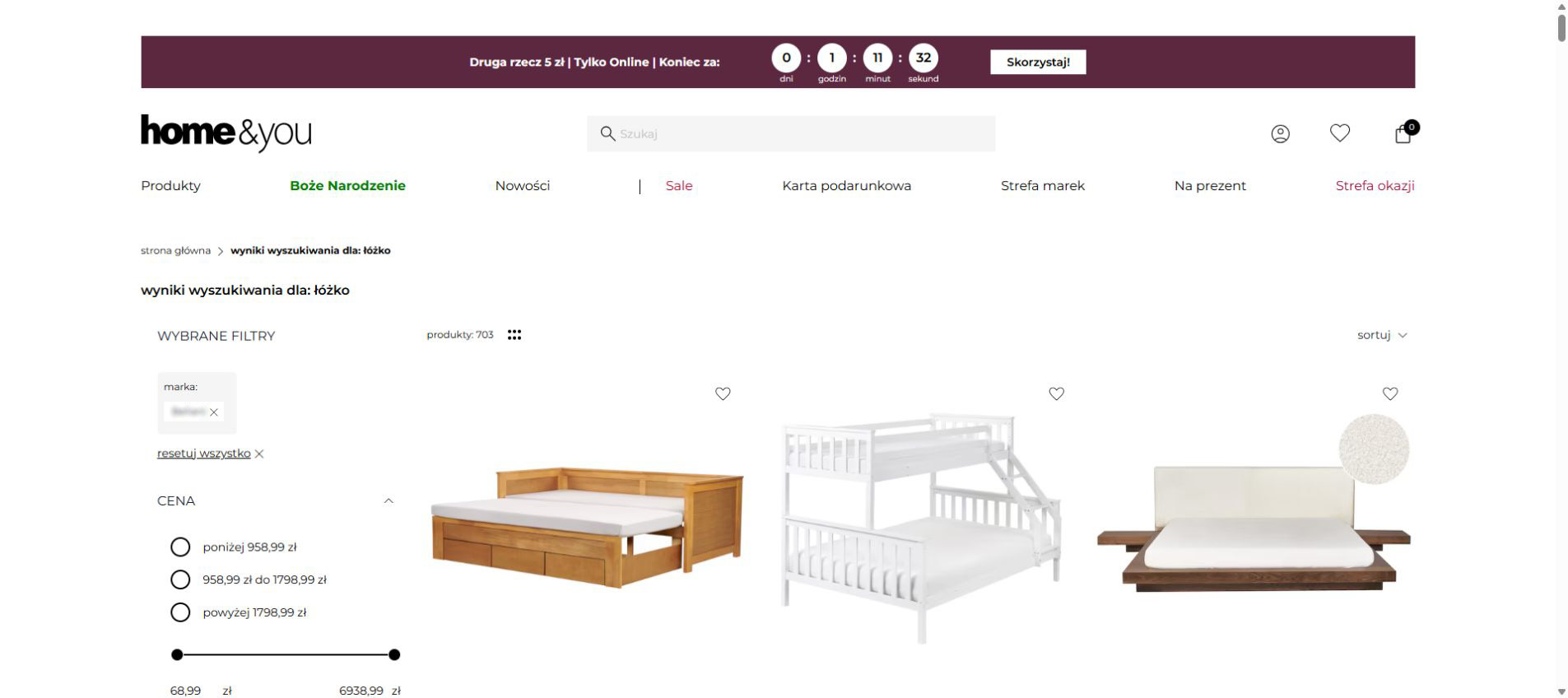
Before making a decision, take a look at the search results and similar offers. Pay attention to the main images, names, prices and the variety of brands. This provides a useful point of reference for your proposal, although the number of results does not necessarily indicate how well the products are selling.
- Which collection should I list for sale on home-you.com?
Don’t start by focusing on the number of products you can export from your warehouse. Choose a range that has a distinct character and meets a specific need. A bedroom textiles set, accessories for a small bathroom or table decorations are easier to plan than a random selection from the entire warehouse.
- Textiles: the customer must identify the size and material. Bed linen, sheets, curtains, blankets and towels require a detailed description. Please specify the composition, dimensions and care instructions. For bed linen, distinguish between the size of the duvet cover and the pillowcases; for curtains, explain how they are hung and the number of pieces. An attractive design alone will not answer these questions.
- Accessories and fittings: show the scale and application. Vases, picture frames, lamps, tableware and kitchen accessories look great in interior arrangements. Alongside such a photo, however, you should also show the product itself and its dimensions. The customer should know whether they are looking at a small decorative item for a shelf or a large piece of décor.
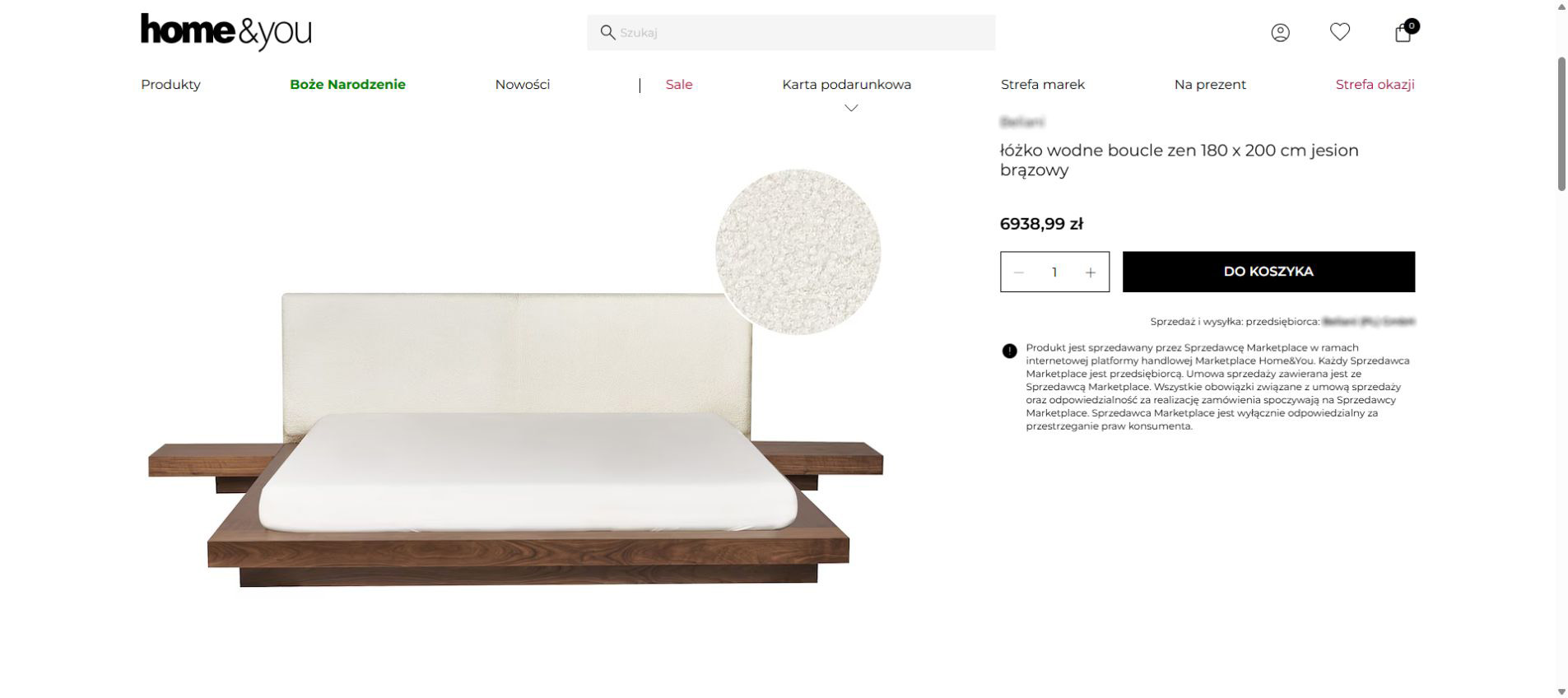
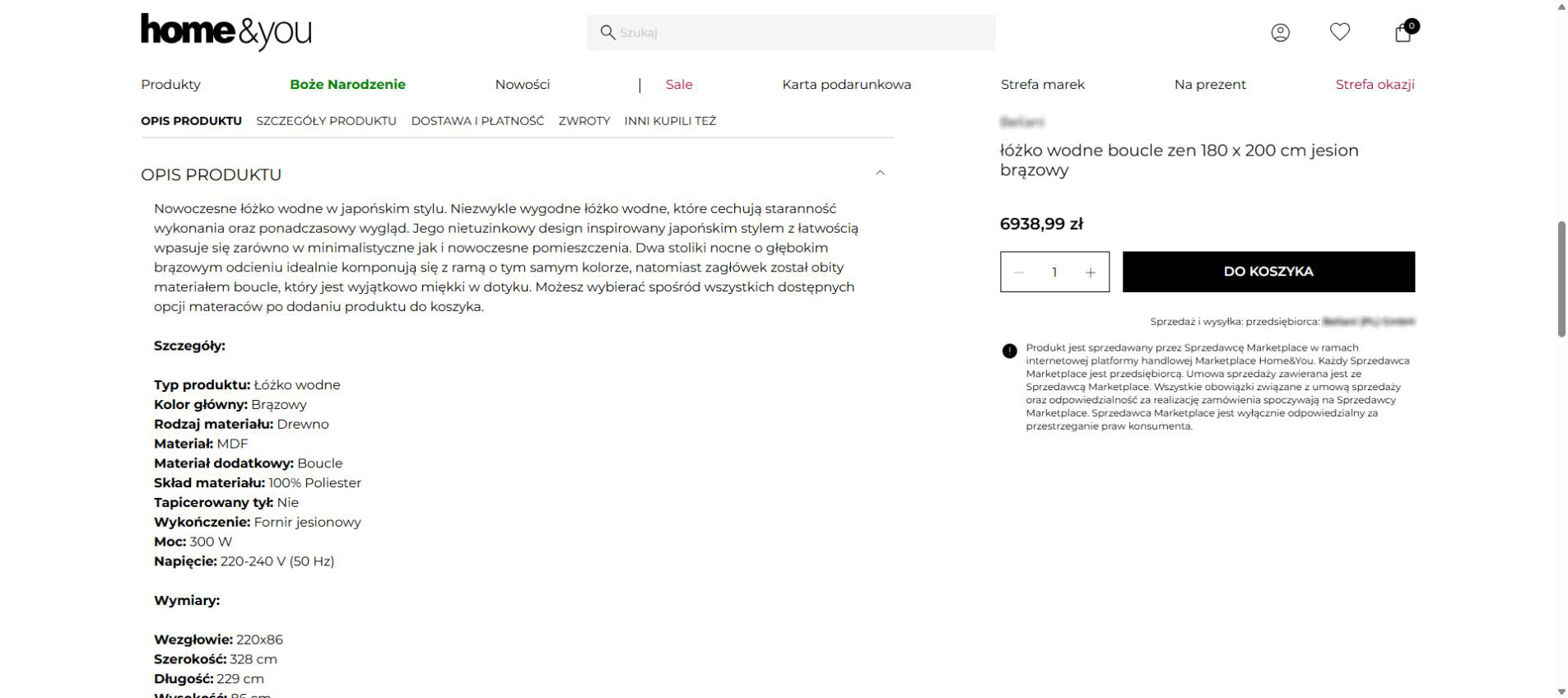
- Furniture: please specify exactly what the purchase includes. For a bed, specify whether you’re selling the frame, a set including the bed base, or a complete set with a mattress. For a side table or bookcase, describe the material and assembly instructions. Different product categories require different details, but the aim is the same: the buyer should know exactly what they’ll receive in the parcel.
- The price per item or the total cost of the basket?
Before listing a product in your catalogue, calculate the cost of purchasing or manufacturing the item, platform fees, packaging, transport and handling. With small items, the cost of packaging can account for a significant proportion of the order. Glass and ceramics require additional protection, and a set of several products may need a larger box.
The HOME&YOU commission rate must be set for your own product range. The example 15% in the sales guide is intended to explain the settlement process and is not a universal price list. The guide describes how commission is calculated on the gross product price and delivery cost, and how VAT is added to the commission; please compare these rules with the contract you have received.
Only set the free delivery threshold or discount on a set once you have carried out this calculation. A higher basket value should improve the order’s performance, not just increase turnover.
- A range that helps you visualise the product in your home
A photo catches the eye, but the description and details are what help the customer make a decision. That’s why it’s worth starting to prepare a listing on HOME&YOU by asking: where will the product be used, what are its dimensions, and what will the customer actually receive? The answers should be consistent throughout the listing.
- Product name and brand recognition: In the title, include the product category and the features needed to identify it. „Decorative cushion cover, 45×45 cm, cotton, beige” says more than the collection name alone. Add the model or brand where this helps to distinguish the product. Do not include descriptions that are not supported by the documentation.
- Images and consistency of the variant: Combine a product shot with a styling shot and a close-up. For textiles, show the texture of the fabric and the pattern; for a lamp, – the shade and base, attached to the piece of furniture – design and intended use. The colour shown in the photograph must correspond to the variant listed in the offer. Any accessories used for styling should not imply that they are included in the price.
- Description and contents of the purchase: In the description, start with the intended use, then move on to the specifics: the material, dimensions, items included in the set and care instructions. Only include information about dishwasher safety, fabric properties or certification if you have confirmation from the manufacturer.
Kacper Pawlak, Marketplace Specialist at bTOP, highlights the distinction between a product and a set: a pillowcase, a pillow with filling, and a set of two pillowcases each require separate, unambiguous data. Simply changing the title is not enough if the product ID and parameters still refer to a single item.
- From product range proposals to the seller’s account
Registering as a HOME&YOU seller is not simply a matter of creating a customer account. The public guide first describes the commercial assessment and then the invitation to create an account. It is therefore advisable to submit a proposal to the Marketplace team before undertaking extensive work on the catalogue.
- Product range submission: The application should outline who the company is, which brands and categories it offers, and how many products it plans to launch. Please include the shop’s address, sample photos and information on order fulfilment. The guide provides the contact details: marketplace@bbk.com.pl – Ask the team for the current guidelines on how to join.
- Conditions and details to be verified: During the discussion, agree on the scope of the catalogue, payment terms and logistics. Prepare consistent registration, contact and bank details, as well as the documents specified in the operator’s process. Acceptance of the collaboration does not replace the subsequent preparation of quotations.
- Prepare the data so that it can be retained in future updates
- Source catalogue: Organise the product IDs, brands, categories, variants and images in the source system. For a new product listing, complete the required fields, manufacturer and safety information, and the relevant instructions. If the product is already in the platform’s catalogue, check its product ID, size, material and set contents before linking it.
- Proofreading prior to wider publication: Select a small batch to check: a single product, a set and a few variants. Once published, view each product page as a customer would. Check not only the content, but also the price, availability and delivery terms. Any errors spotted on a few products are easier to rectify before scaling up the import.
- How do you use HOME&YOU on Mirakl?
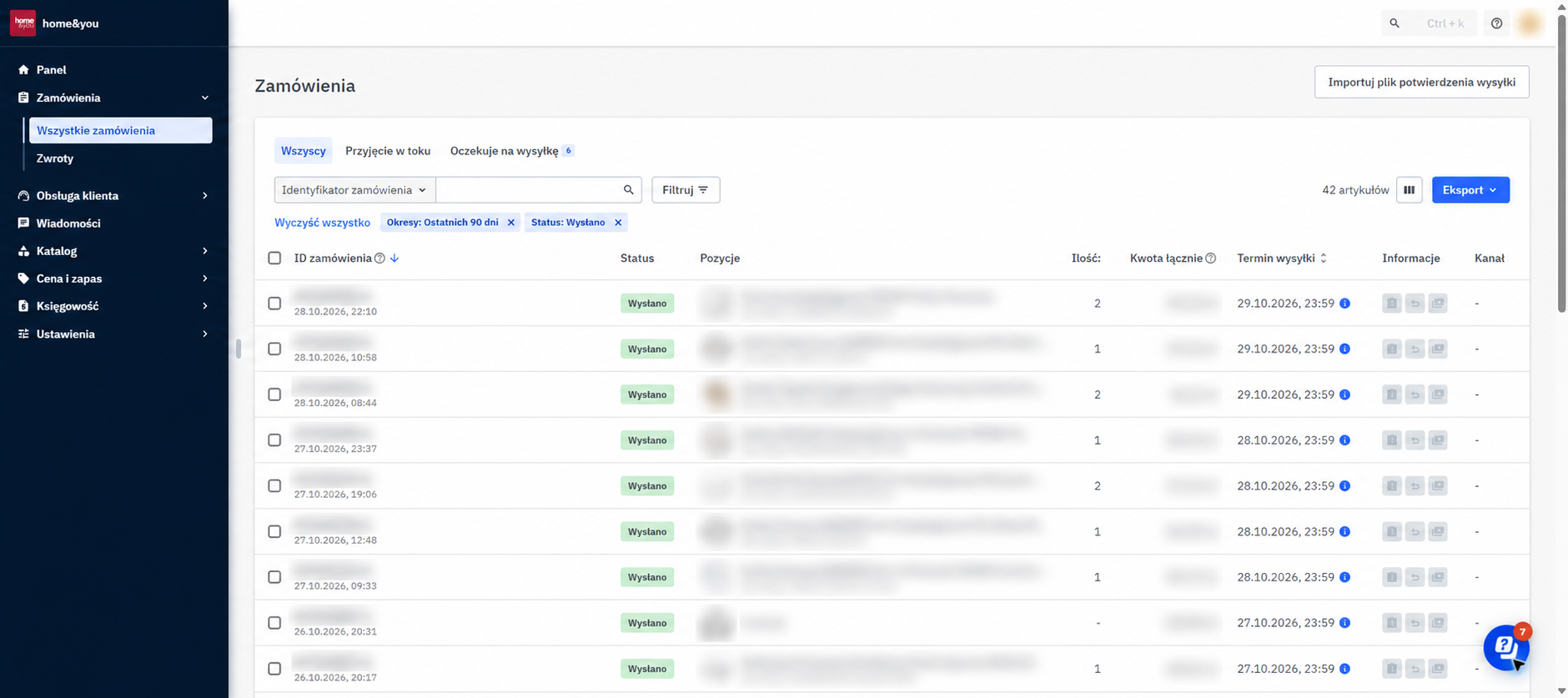
The Mirakl dashboard is used to manage the catalogue, offers and orders. For larger-scale operations, it is worth integrating it with a sales system. Before choosing an integration, check its actual scope: products, prices, stock levels, order retrieval and the transfer of dispatch data.
Determine where the product description and price are generated, and which system updates the stock levels. Without this, any changes made in the control panel may be overwritten during the next import. Also, appoint a person responsible for communications and for responding to any issues with orders.
- Delivery tailored to the product, rather than a single standard approach for the whole shop
- Packaging suitable for the goods: You need to protect the duvet from damp, the glasses from knocks, and the mirror from damage to its edges. With furniture, you also need to consider the dimensions, the number of parcels and the scope of the carrier’s service. The cost and time required to prepare the consignment should be based on what you are actually sending.
HOME&YOU specifies the seller on the product page. Purchases from different companies may arrive in separate parcels; goods from third-party sellers cannot be collected from home&you stores. Therefore, do not automatically apply the delivery terms for our own collection to Marketplace offers.
- Delivery and after-sales service: Before you start, complete your dispatch settings – The guide points out that the absence of these details may result in listings becoming inactive. You should also provide a returns address and details of how to handle complaints. Customers should be given clear instructions on who to contact and how to resolve any issues with a damaged or incomplete order.
- Seasonality and collection development: what to do after the first publication?
The interior design catalogue changes with the seasons and shopping occasions. Preparing festive decorations or garden accessories involves taking photographs, writing descriptions, stocking up and arranging delivery. Also allow time for listing new products and correcting errors. Alongside seasonal products, maintain year-round collections that you can regularly restock. Introduce new sizes and colours based on availability and customer interest. Expanding the range of variants makes sense when each one has the right photos and a reliable dispatch date.
Read buyers’ questions and the reasons for returns. If customers are missing information about the thickness of the blanket, how the curtain is hung, or the number of items in the set, update the product listing. If a particular type of ceramic item is getting damaged, improve the packaging. These are specific steps worth taking before ramping up your promotional activities.
- What can we do for your shop on bTOP?
We begin our work on HOME&YOU by focusing on the catalogue and how it is presented. We help identify collections worth introducing, organise the different variants and sets, and prepare information for discussions with the platform. This ensures that the product range proposal has a clear direction.
We then draft names and descriptions, select images, and map out categories and the required data. We assist with configuring processes within the scope supported by the chosen system. We also check that, once published, the client sees the same listing as the one prepared in the catalogue. Once sales have started, we can focus on updates, error analysis and optimising future collections. We help keep your data organised so that corrections aren’t lost when stock levels and prices change.
Do you have a collection you’d like to list on the HOME&YOU Marketplace? Get in touch with bTOP. We’ll take a look at your products and work out what needs to be done to turn your idea into a live listing.
Blog author: Specialist in. e-commerce – Kacper Pawlak
Date of publication: 29 October 2026.
 Polish
 English
 German
 Czech
 Hungarian
 Slovak
