


An end to greenwashing in the EU. EmpCo comes into force on 27 September 2026
From 27 September 2026, the e-commerce market and the entire retail sector across the European Union will face a new legislative challenge. A directive comes into force EmpCo (English:. Empowering Consumers for the Green Transition – Directive (EU) 2024/825, the main aim of which is to remove misleading environmental claims from the public domain (so-called. greenwashing) and unconfirmed certificates.
Are your product descriptions, website graphics and certificates on packaging ready for these changes? Find out what is changing, what will be strictly prohibited, and how you should inform customers from September 2026.
What is the EmpCo Directive and who does it apply to?
The EmpCo Directive amends existing EU consumer protection legislation (including the Unfair Commercial Practices Directive). It applies without exception in all 27 Member States of the European Union.
Any company selling goods or services to consumers (B2C) within the EU — regardless of whether it is based in Poland, Germany or outside the EU — must adapt its marketing communications to the new guidelines.
Important: The Directive does not provide for a transition period for products that are already on sale or in stock. From 27 September 2026, any description, photograph or packaging visible to the consumer must be 100% compliant with the new legislation.
What is strictly prohibited?
The provisions of the Directive remove so-called „general environmental claims”. If a seller does not have independent, official and verifiable evidence to back up their claims, they may not use terms that suggest neutrality or a positive impact on the environment.
1. General and vague terms
Forget about generic slogans used on banners, in auction descriptions or on photos. The following are examples of phrases that are not permitted without detailed evidence:
- „Eco”, „Eco”, „Environmentally friendly”
- „Sustainable”, „Eco-trend”, „Conscious choice”
- „Biodegradable”, „Recyclable” (without providing details of the terms and scope)
2. Declarations of „climate neutrality” based on carbon offsets
One of the key changes in the EmpCo Directive is a total ban on promoting products as „climate-neutral” or „CO₂-neutral” if this effect has been achieved by offsetting emissions (e.g. by planting trees outside the supply chain to compensate for emissions from production).
3. Custom icons and „wild” certificates
Sellers are no longer permitted to design their own graphics for product images (e.g. a green leaf with the text „100% Eco” or graphics imitating quality seals), unless these are based on an official, externally audited certification scheme.
It is also prohibited to create custom labels that suggest a formal legal guarantee (e.g. graphics imitating EU guarantee marks).
What is still permitted?
The new law does not prohibit the promotion of products’ environmental benefits — it merely requires that the information be specific, measurable and verified.
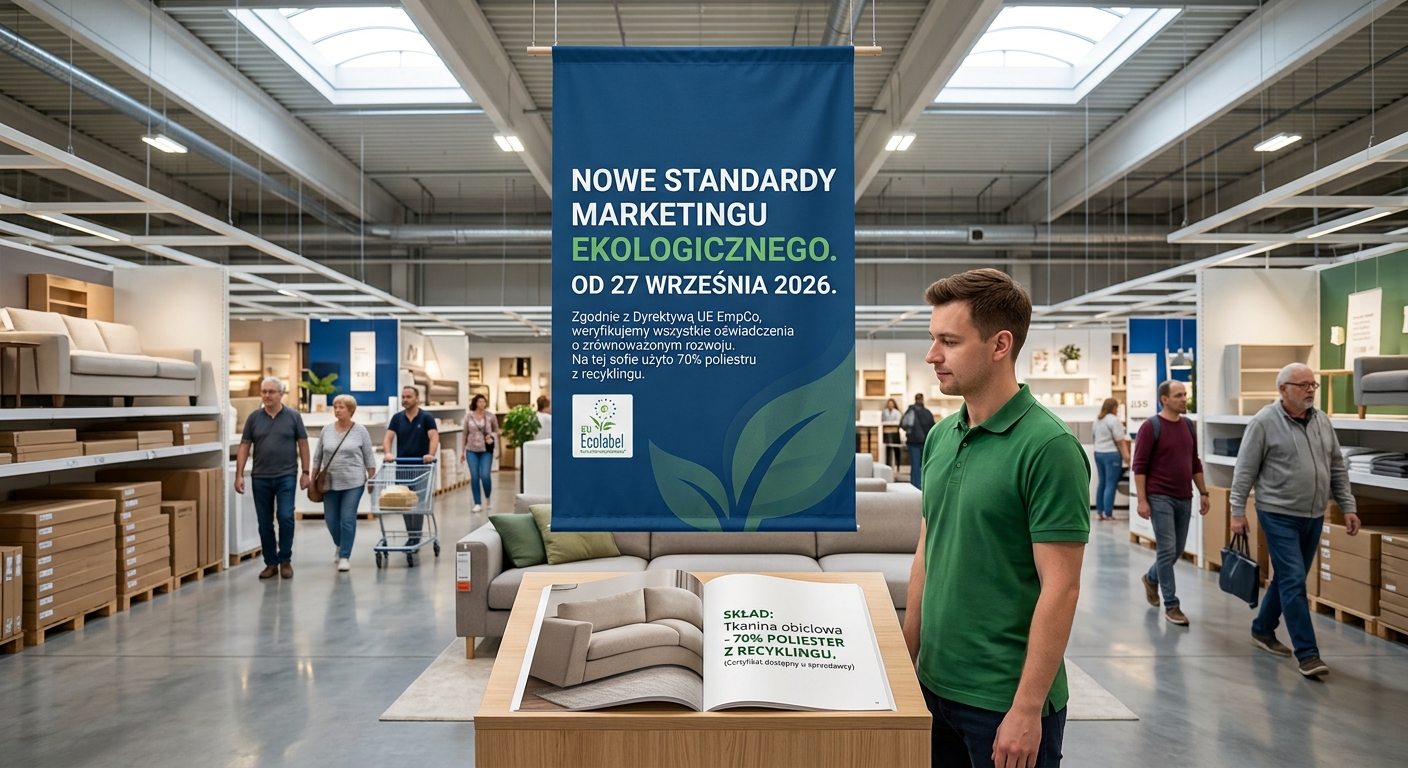
1. Accurate and verifiable information on the composition:
- ❌ Wrong: „A sofa made from eco-friendly fabric”
- 🟢 Good: „The sofa cover is made from 70% recycled polyester”
2. The following certificates will be officially recognised in the EU:[Text wrapping]It is permitted to display recognised and audited labels, such as EU Ecolabel, FSC, Blue Angel or EU Organic (EU Organic Farming), provided that you hold a current and valid certificate.
3. Standardised two-year warranty label:[Text wrapping]As part of the amendment, a visually standardised message is being introduced on e-commerce websites across the EU to inform consumers about the statutory two-year guarantee on new goods. This is a mandatory requirement, to be displayed directly in the shopping basket or on the product page.
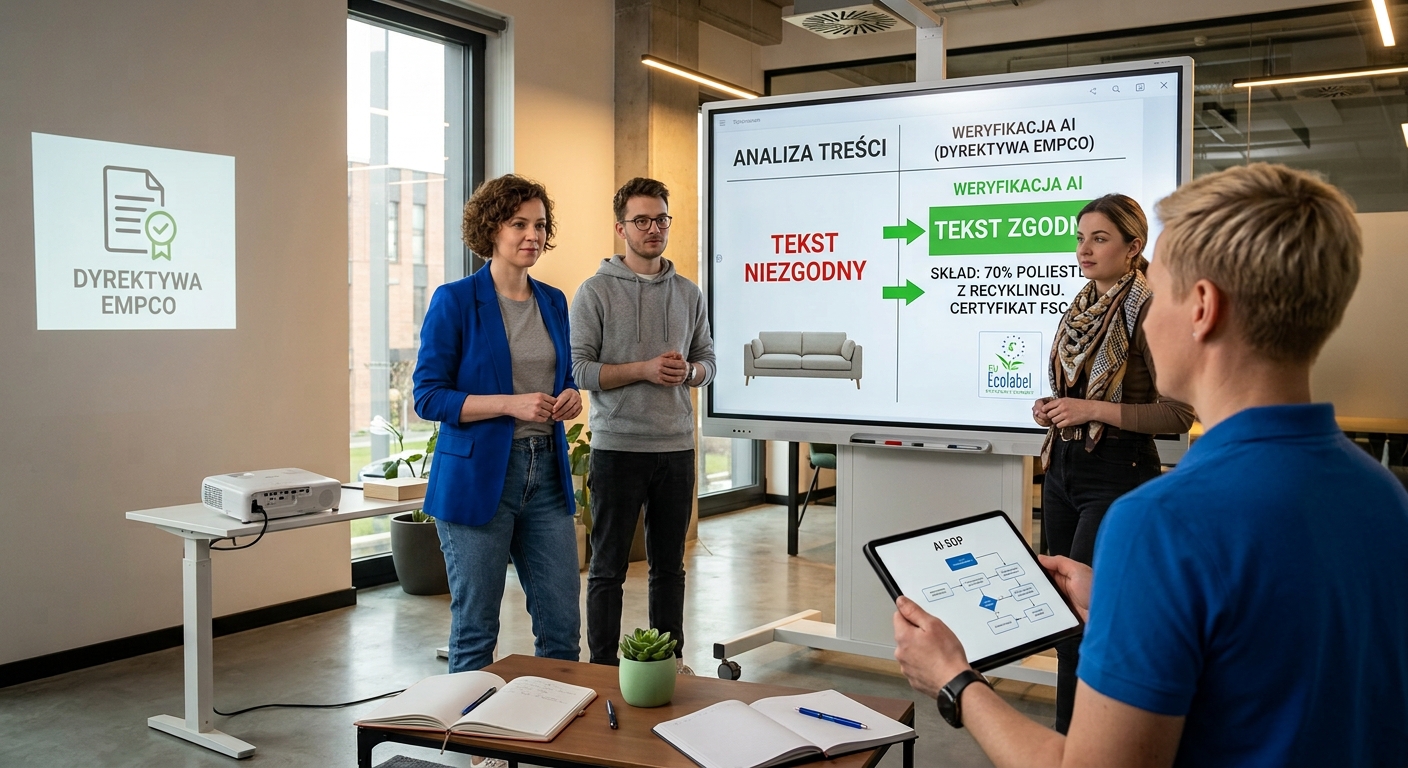
How should we prepare our proposals in light of the changes due to take effect before 27 September 2026?
- Content and image audit: Review the product database, product descriptions in the shop, banner text and product images. Any unauthorised „green” icons and far-fetched slogans are to be removed.
- Preparing the body of evidence: If your product really does stand out for its environmentally friendly production process, describe it in detail and ensure you have the relevant documentation from your supplier in case of an inspection.
- Implementation of the entry verification procedure: From today, every new description added to the website should be checked for compliance with the new directive.
Blog author: Ee-commerce expert – Adrian Śmigiel (CEO)
Date of publication: 24 September 2026.
 Polish
 English
 German
 Czech
 Hungarian
 Slovak
