


Significant changes are on the horizon for the e-commerce and online financial services sectors. The new EU Directive 2023/2673 aims to simplify the processes for cancelling online purchases and services. The most significant change is the requirement to introduce a prominent and user-friendly „cancel contract” button, which must be just as accessible as the „Buy Now” button. What does EU Directive 2023/2673 cover? Directive 2023/2673, sometimes referred to by experts as ‘Omnibus 2.0’, amends the rules on distance contracts. Although its main focus Read more
An abandoned basket is a real pain because it happens right at the point where money is involved. The customer has already chosen a product, added it to their basket, sometimes even entered their details… and then they disappear. And here’s the important thing: this isn’t always a „problem to be fixed”. Some people treat their basket as a „save for later” list or are comparing prices. Research by Baymard shows that a large proportion of abandoned baskets are simply the result of browsing without any intention to buy. But if we filter out mere „window shopping”, we’re left with a group that can be won back. And interestingly – Read more
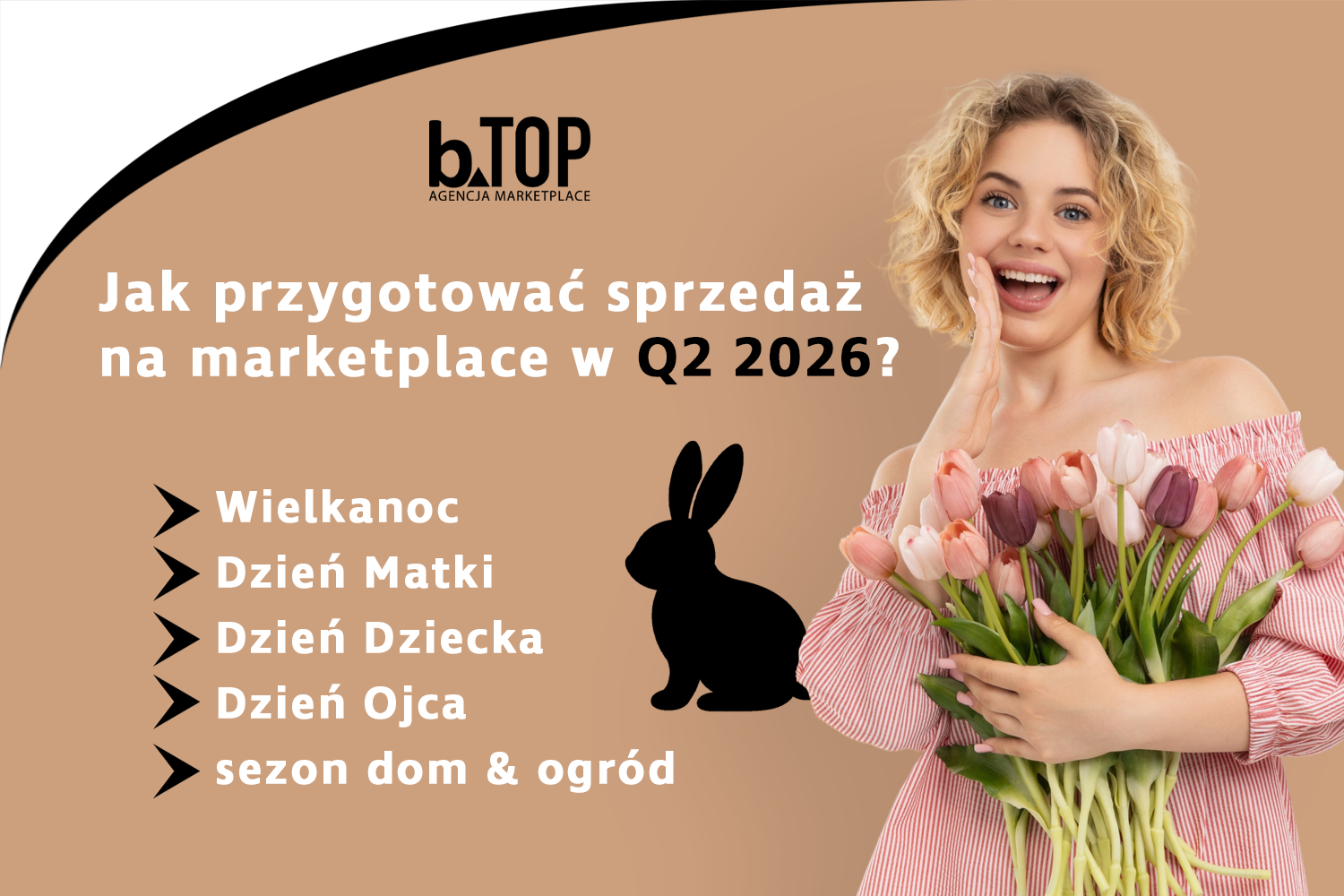
Q2 in e-commerce often seems unremarkable only from a calendar perspective. It doesn’t carry the same weight as Black Friday or the December gift-buying peak, but it is precisely in the second quarter that retailers can build up several smaller sales waves which, taken together, yield a very solid result. The problem is that many companies still treat spring too broadly: something for Easter, something for the garden, some gifts. But the marketplace doesn’t reward generality. The marketplace rewards those who can tap into a specific Read more

Scalability in e-commerce in 2026 refers to the ability to grow amidst increasing market complexity. It is the capacity to handle higher sales volumes whilst maintaining operational fluidity, consistent data and full control over processes. Today, an e-commerce system must keep pace not only with the growth in order volumes, but also with rapid technological changes, new sales channels and evolving shopping patterns. Below are 10 key features of a scalable e-commerce system in 2026. Centralised management of all sales channels A scalable system integrates Read more
The year 2026 marks a turning point for e-commerce. Artificial intelligence is no longer just a tool for marketing or customer service – AI is effectively taking over the start of the shopping process. What has been the norm for years („Google → shop → shopping basket”) is beginning to crumble. Shopping is increasingly taking place… in conversation. AI is taking over the start of the shopping process AI assistants are increasingly responsible for searching for, comparing and recommending products. Customers no longer need to browse through dozens of websites, analyse reviews or check price comparison sites. All it takes is a single question Read more

In 2026, e-commerce customers are more discerning than ever. An attractive product and a competitive price are no longer enough – today, the shopping experience is what determines which shop customers choose. It is this experience that builds loyalty, positive reviews and long-term relationships with the brand. As the Gemius E-commerce in Poland 2024 report shows, previous positive experiences are the most important non-financial factor influencing the choice of an online shop. The question is: does your e-commerce business meet these expectations? Customers expect positive experiences. The shopping experience is something far Read more
For e-commerce, 2026 will not be „just another year of campaign optimisation” or a minor evolution along the lines of faster deliveries, better UX and a little more automation. The biggest change will happen earlier – at the stage when the customer is only just beginning to think about making a purchase. Increasingly, the first place where consumers look for inspiration and guidance is no longer Google or a price comparison site. It’s generative tools: ChatGPT, Gemini, Claude or AI Mode. Customers aren’t „searching” for links – they’re seeking advice. And if in Read more
Until recently, many companies treated online sales as a simple process: you post a listing, run an advert, and „it all sort of works out”. Today, it’s clear that this phase is over. The market is maturing, competition is growing, and marketplaces are becoming an increasingly demanding environment. In 2026, it won’t be those who „sell everything” who come out on top, but those who have control over the process: data, product range, logistics and profitability. Marketplaces are no longer just an add-on. They are becoming the operating system for sales. By 2026, in many sectors, the marketplace will be the primary channel for acquiring Read more
Clicking „Buy and pay” does not mark the end of the customer journey. For the buyer, this is just the start: uncertainty sets in („Did it go through?”, „when will it be dispatched?”, „where will the parcel end up?”), whilst for the shop, the fulfilment process begins – a process which, without good communication, can lead to costs, returns and enquiries to customer service. One of the most underrated elements of this communication is the order confirmation email. Many shops treat it as a mere formality: a template from the platform, random content, automatically generated text with no structure. The result? The customer feels, Read more

The way customers search for products online is changing faster than many retailers have realised. Increasingly, rather than typing a query into Google, users are asking AI-powered tools directly: GPT, Claude, Perplexity or Gemini. These tools answer questions such as „where’s the best place to buy”, „which shop is trustworthy” or „which option should I choose”. If your online shop doesn’t appear in these results, you’re effectively losing out on traffic and sales — even if you have Read more
 Polish
 English
 German
 Czech
 Hungarian
 Slovak
