


EPR and new packaging regulations: will your e-commerce be able to sell to the whole of the EU after 2026?
Until now, cross-border e-commerce has looked simple: you list on a marketplace, connect a courier, set prices and... sell abroad. From mid-2026, this scenario will start to change. A new EU regulation comes into force PPWR (Packaging and Packaging Waste Regulation), which tightens the rules on packaging and Extended Producer Responsibility (EPR). In short, if you don't meet the EPR obligations in a country, you don't sell there legally - including via the marketplace. Furthermore, the platforms themselves (Allegro, Amazon, Kaufland, eMAG, TEMU and others) will be obliged to keep an eye on whether sellers are registered in the EPR systems. Lack of EPR number / participation in the system = real risk of sales being blocked.
In this blog post we explain in human terms:
- what it is EPR and PPWR,
- since the regulations will start to „bite” the sellers,
- How it can block cross-border sales,
- what data you need to have encompassed in your systems,
- How a marketplace agency can sort it all out for you.
1. what the EPR and PPWR are about - in human terms
EPR (Extended Producer Responsibility) is the principle that whoever places products or packaging on a country's market is responsible for their subsequent collection, recycling and management. The producer within the meaning of the EPR is often not the factory, but the online shop or marketplace retailer that first „drops” the goods on the market of a given country - even if it is physically sitting in Poland. In practice, EPR means, among other things:
- registration in the relevant registers/recovery organisations,
- reporting on quantity and type of packaging (kg, material, type),
- payment of contributions to finance the collection and recycling system.
PPWR (Packaging and Packaging Waste Regulation) is the new EU regulation on packaging and packaging waste, which replaces the old 1994 directive. The text not only tightens the requirements for packaging (recyclability, recyclate content, reduction of unnecessary packaging), but also organises the EPR rules across the Union - including for online retailers. Key facts:
- The regulation entered into force on 11 February 2025,
- Most of the rules will take effect from 12 August 2026 in all EU countries simultaneously,
- applies to any packaging entering the EU market - including that which you send in a parcel from Poland abroad.
2. what happens from 2025/2026 - a timeline in a nutshell
To grasp this, it is useful to look at it as a simple timeline:
- 11.02.2025 - PPWR becomes EU law (start of transition period).
- 2025 - 1st half of 2026 - countries prepare implementation, companies „close” EPR registrations, markets begin to tighten the screw.
- c. mid-2026 / 12.08.2026 - most of the key PPWR provisions come into effect; marketplaces need to verify much more thoroughly that sellers meet EPR obligations in the countries they ship to.
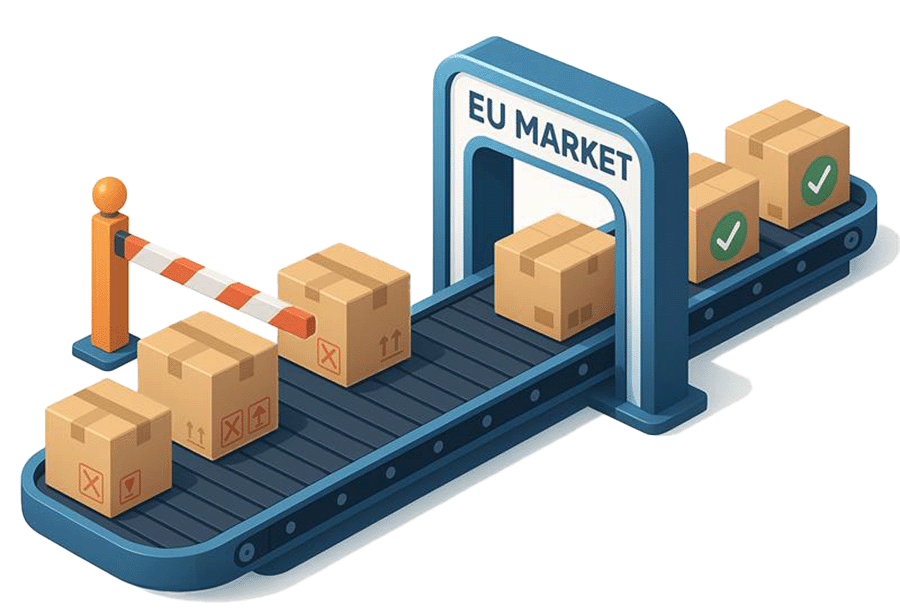
From around mid-2026, selling on marketplaces is supposed to be possible only in those countries where you meet the EPR obligations - otherwise the platform simply should not allow your listings.
 3. what this means for marketplace sellers (Allegro, Kaufland, Amazon, eMAG, TEMU...).
Up to now, EPR has been a „nice-to-have” compliance add-on for many e-commerce businesses. Now it is becoming a condition for marketplace access. New legislation and related regulations (including the Digital Services Act) make it mandatory for marketplaces to check that sellers are registered with EPR systems. In practice:
- Amazon already requires EPR numbers in some countries,
- in some countries the marketplace can, and sometimes must, take over the EPR duties for the vendor - but this always costs money,
- The PPWR will extend this obligation to the whole of the EU, so that other platforms will also have to play „by the same rules”.
So if you want to send goods from Poland abroad (e.g. to France, Spain, Germany, Italy) via foreign marketplaces (e.g. Amazon, Kaufland, EMAG, Cdiscount, TEMU) then without an EPR you risk having your listings blocked, your account blocked and, in extreme cases, administrative penalties.
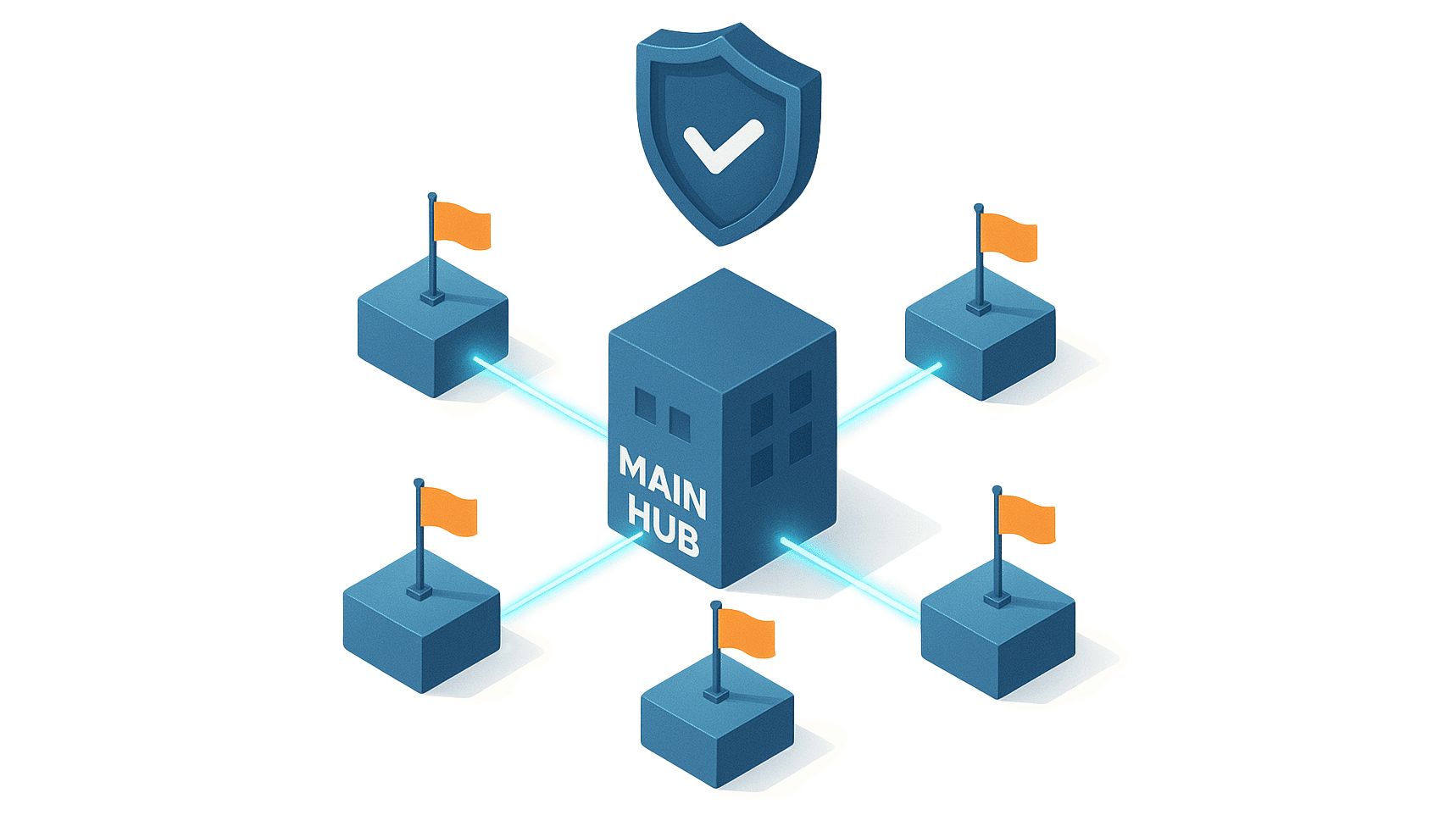
For sellers „without a local company” in a particular country, one more thing is important: the PPWR requires that a distance seller has a so-called Authorised Representative (EPR) appointed in each country to which it sells - unless local law allows a different model. His or her responsibilities include registering your business with local services, filing reports and communicating with authorities in case of inspections.
4. how can the EPR block cross-border sales?
Imagine a simple situation: You have a shop in Poland, you send parcels across Europe via Allegro, Amazon or your own shop with a cross-border operator.
If:
- you are not registered in the EPR systems in the target countries,
- you do not have an authorised representative assigned where required,
- you do not report weights and types of packaging,
it from a certain point:
- marketplace should not allow your listings in these countries,
- the logistics operator may have restrictions on handling non-compliant shipments,
- local environmental authorities can initiate proceedings, impose fines, block sales.
It's not just about „green on paper”. It's about the fact that not having an EPR = risk of being cut off from cross-border sales, even though you are technically able to send a parcel anywhere.

5. what data do you need to have encompassed in your systems?
Here we come to the part that connects most strongly with day-to-day work in marketplaces and Base / ERP-type systems. For an EPR to „work”, you need to have structured data such as:
5.1 Weight of packages
- weight of packaging (e.g. carton + pouch + labels),
- weight of packaging (master carton, stretch film, fillers),
- preferably broken down into material categories (paper, plastic, glass, etc.).
5.2 Types of materials
- whether the packaging is paper, plastic, glass, aluminium, cardboard, etc,
- whether there are „problem” elements (e.g. composites that are difficult to recycle).
5.3 Breakdown of sales by country
- where your parcels realistically land (how much % to DE, FR, ES, IT, etc.),
- what volume of packaging (kg) is allocated to each market.
5.4 Mapping products to packaging
- which SKU / EAN is packaged in which pack,
- whether packaging differs between markets (e.g. different carton on DE, different on FR).
5.5 EPR/registration numbers
- national registration numbers,
- linking them to marketplace/store accounts.
Without this, it is impossible:
- meaningful reporting,
- anticipate the cost of EPR contributions,
- and even more so - to plan margins and prices sensibly for individual countries.
6 What is worth doing now? A short checklist before 2026
To avoid waking up in August 2026 with sales blocked, it is worth treating the EPR as a normal implementation project.
Step 1 - Check where you are realistically selling to
- make a report of the target countries from the marketplaces and the logistics system,
- distinguish between markets where you „sell a lot” and those where you have single orders.
Step 2 - Determine which EPR obligations apply to you
- packaging - mandatory,
- in addition: electronics (WEEE), batteries, and in some countries also e.g. textiles, furniture, toys, tyres, etc.
- for each country, check whether you need to register, report, pay contributions, appoint an authorised representative.
Step 3 - Get your packaging data in order
- assign a specific package to each product,
- determine and record the weight (broken down by material),
- decide where and how you keep this data (ERP, Base, separate database).
Step 4 - Plan cooperation with partners
- recovery organisations / EPR operators in each country,
- authorised representatives,
- logistics operator and integrator - so that the data „clips” between the systems.
Step 5 - Recalculate margins and prices
EPR premiums are simply another unit cost. If you have been „counting” the packaging roughly so far, it is now worth it:
- count the real cost of the EPR per piece/order,
- include it in the price calculation / marketplace strategy.
Bottom line - EPR is not „paperwork”, it is the ticket to the EU after 2026
The new packaging regulations and EPRs can be boiled down to one sentence: Want to sell to the whole of the EU after 2026? You must have embraced Extended Producer Responsibility and packaging data. The good news is that there is still some time to embrace the subject - provided you treat it like a normal implementation project, rather than a „we'll sort it out one day”. If you want to:
- sort out the topic of EPR in the context of Allegro, Amazon, Kaufland, eMAG, TEMU and other marketplaces,
- check how the new regulations will affect your margins and prices,
- build a cross-border sales strategy that „survives” 2026 and beyond,
We can help you with this - from risk analysis, to organising data and feeds, to the ongoing maintenance of marketplaces in the new regulatory realities. Contact us via the contact form available on our website.
Author of the blog: Kacper Pawlak
Date of publication: 01.12.2025r.
 Polish
 English
 German
 Czech
 Hungarian
 Slovak
