



How do young people influence the whole family’s shopping? Allegro
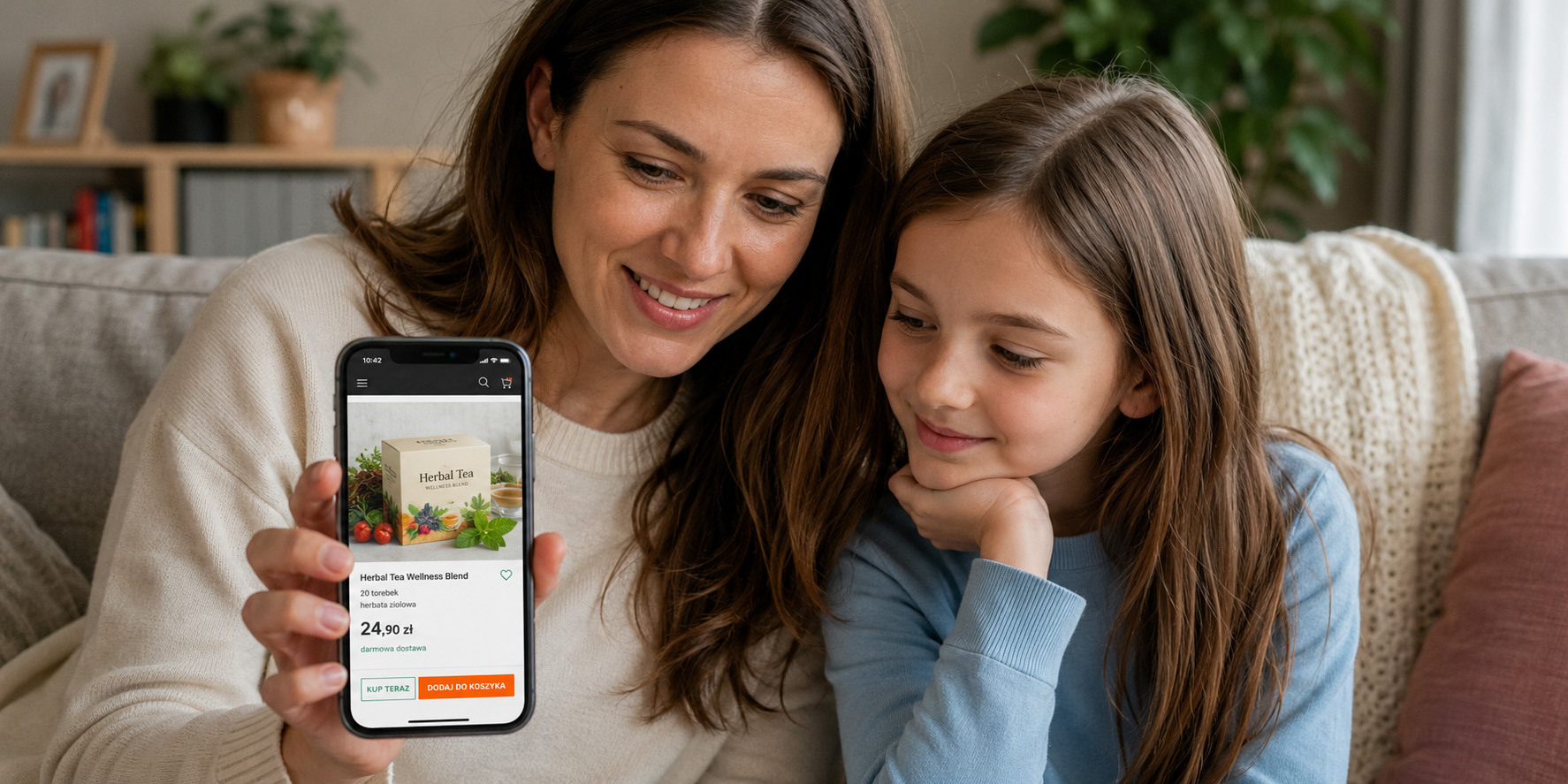
Young consumers are increasingly not only searching for products online, but also influencing the purchasing decisions of the whole family. They send links, compare offers, and highlight trendy brands and new products. At the same time, they are keen to draw on their parents’ experience and take their recommendations on board.
As a result, online shopping is becoming an intergenerational process, in which one person finds a product, another assesses its value for money, and yet another makes the payment.
Shopping as a family team effort
For many teenagers, their first experiences with e-commerce begin under their parents’ guidance. It is the adults who show them how to compare prices, check reviews, choose sellers and assess the security of transactions.
The report „Allegro: Young Phenomena” shows that in around half of households, children search for products themselves, but leave the final decision and payment to their parents. In one in four cases, the young person fills the entire shopping basket, whilst the adult simply pays for it. In 23% situations, however, the initiative comes from the parents, who consult the teenager on their choice.
This shows that the roles of the buyer, the adviser and the payer are increasingly overlapping.
Recommendations work both ways
Young people have a strong influence on their parents’ shopping decisions in categories such as fashion, electronics, cosmetics, sport and food. Young people are often the first to spot trends and products that are popular on social media.
Parents, on the other hand, remain an important source of information when it comes to purchases relating to health, travel, home furnishings and groceries. For 71% of those surveyed, advice from mum or dad is more important than recommendations from influencers.
For retailers, this means that their product range should appeal not only to young users, but also to parents, who assess the price, quality and safety of a purchase.

Young people want to shop sensibly
Generations Z and Alpha do not shop solely on the basis of trends. As many as 79% of those surveyed say they try to save and put money aside. Special offers, discounts, free delivery and the ability to compare prices are therefore an important part of their shopping habits.
At the same time, possessions remain a means of self-expression. For the 79% respondents, what they own says a great deal about their style, interests and passions. Young people therefore want to shop more cheaply, but they are not willing to compromise on their individuality.
What does this mean for e-commerce?
Retailers should view shopping as a family affair. The person browsing the products is not always the one paying, and the person funding the purchase does not always make the decision on their own.
An effective offer should capture the attention of young customers whilst also building trust with parents. What matters, therefore, are good photos, a clear description, a transparent price, customer reviews, delivery terms and a straightforward returns policy.
It is also becoming increasingly important whether a product can be easily shared via a messaging app. Sharing links, special offers and „recommendations” has now become one of the most important ways of influencing family purchasing decisions.
About the study
The report „Allegro: Young Phenomena” was produced in 2026 by Allegro and the agency Y&LOVERS.
The qualitative part comprised 12 ethnographic sessions and 6 affinity groups involving participants aged 13–21 from Warsaw, Poznań, Lublin and Skarżysko-Kamienna.
The quantitative part of the survey was conducted using the CAWI method in two rounds on a representative sample of people aged 13–24. 809 respondents took part in the first round, and 600 in the second.
Blog author: Miś bTOP
Date of publication: 21 July 2026.
 Polish
 English
 German
 Czech
 Hungarian
 Slovak
