


Base Analytics – why will intuition alone not be enough in 2026?
Many sellers still manage their sales based on individual reports from Allegro, Amazon or eMAG. The problem arises when a company is already operating on several marketplaces simultaneously, has its own online shop, several warehouses and thousands of active listings. In such an environment, it is very easy to make decisions based on incomplete data.
This is precisely why Base Analytics – an analytics module available within the Base system – is becoming increasingly popular, as it allows you to view sales from a broader perspective and identify issues affecting the company’s performance more quickly.
What is Base Analytics?
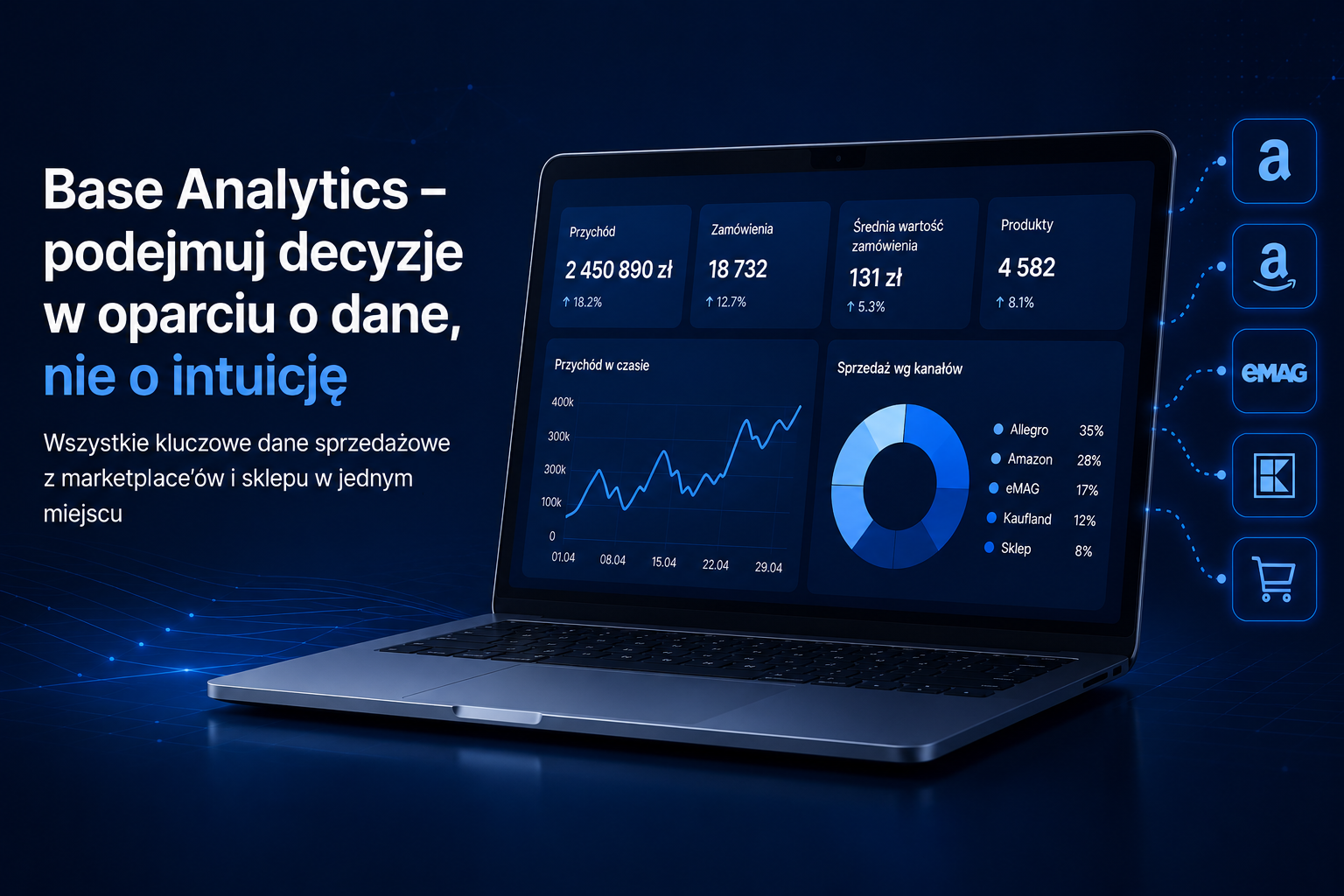
Base Analytics is a comprehensive reporting tool that enables the analysis of sales data, orders, products, stock levels and the performance of individual sales channels. Rather than having to switch between multiple marketplace dashboards, sellers have access to all their data in one place.
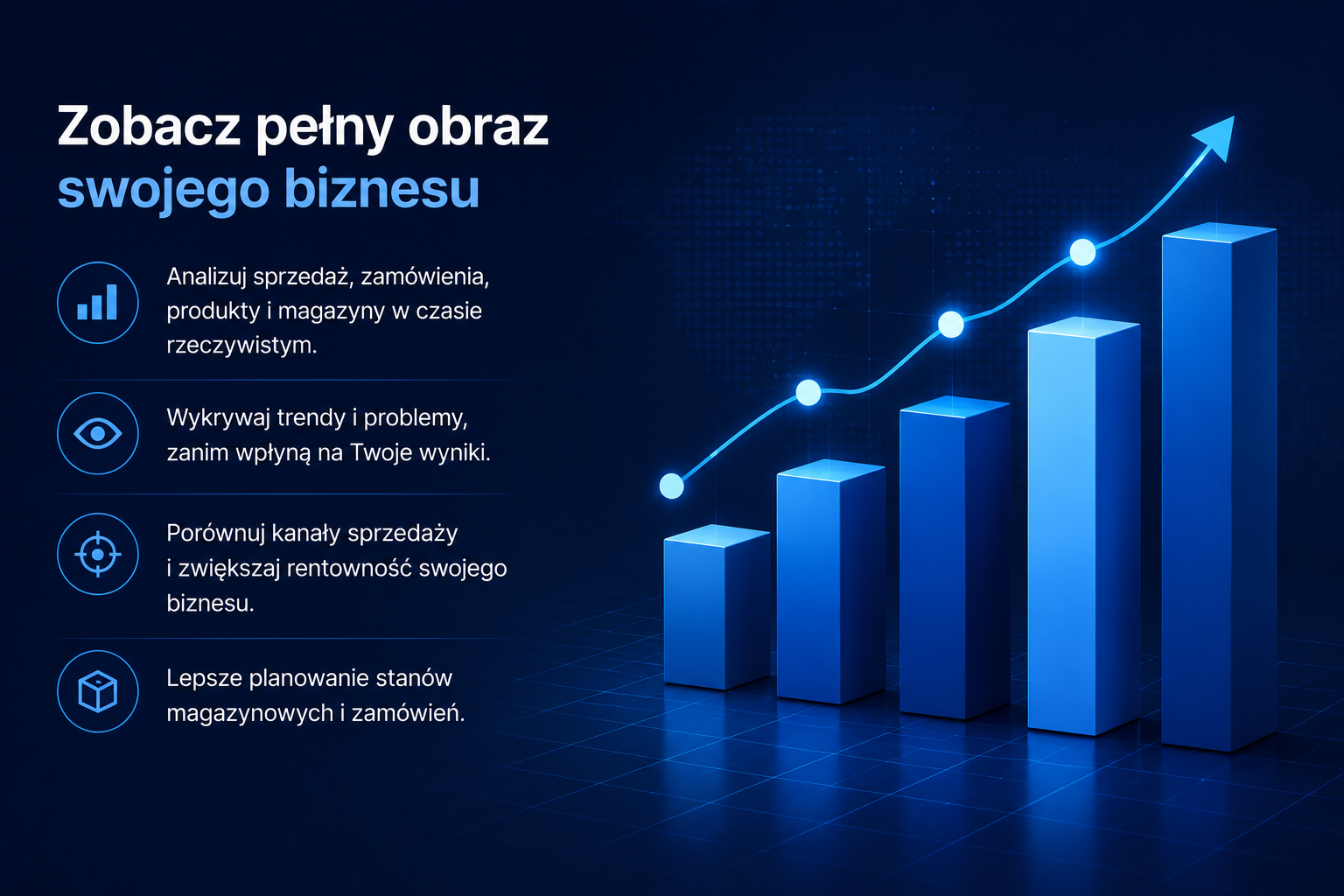
This makes it possible to quickly check:
- which products generate the highest sales,
- which listings lose their visibility,
- which sales channels are the most profitable,
- where logistical problems arise,
- which categories are growing the fastest,
- What do the sales figures look like, broken down by country and marketplace?.
Why are standard reports often not enough?
Retailers expanding into multi-channel sales are increasingly facing the same problem. Data is scattered across Allegro, Amazon, Kaufland, eMAG, their online shop and their ERP system.
As a result, analysing the results requires downloading numerous reports and manually compiling the information in Excel spreadsheets. This process is not only time-consuming, but also increases the risk of errors.
Base Analytics allows you to automate this process and analyse your entire business in one place.
What data is worth monitoring?
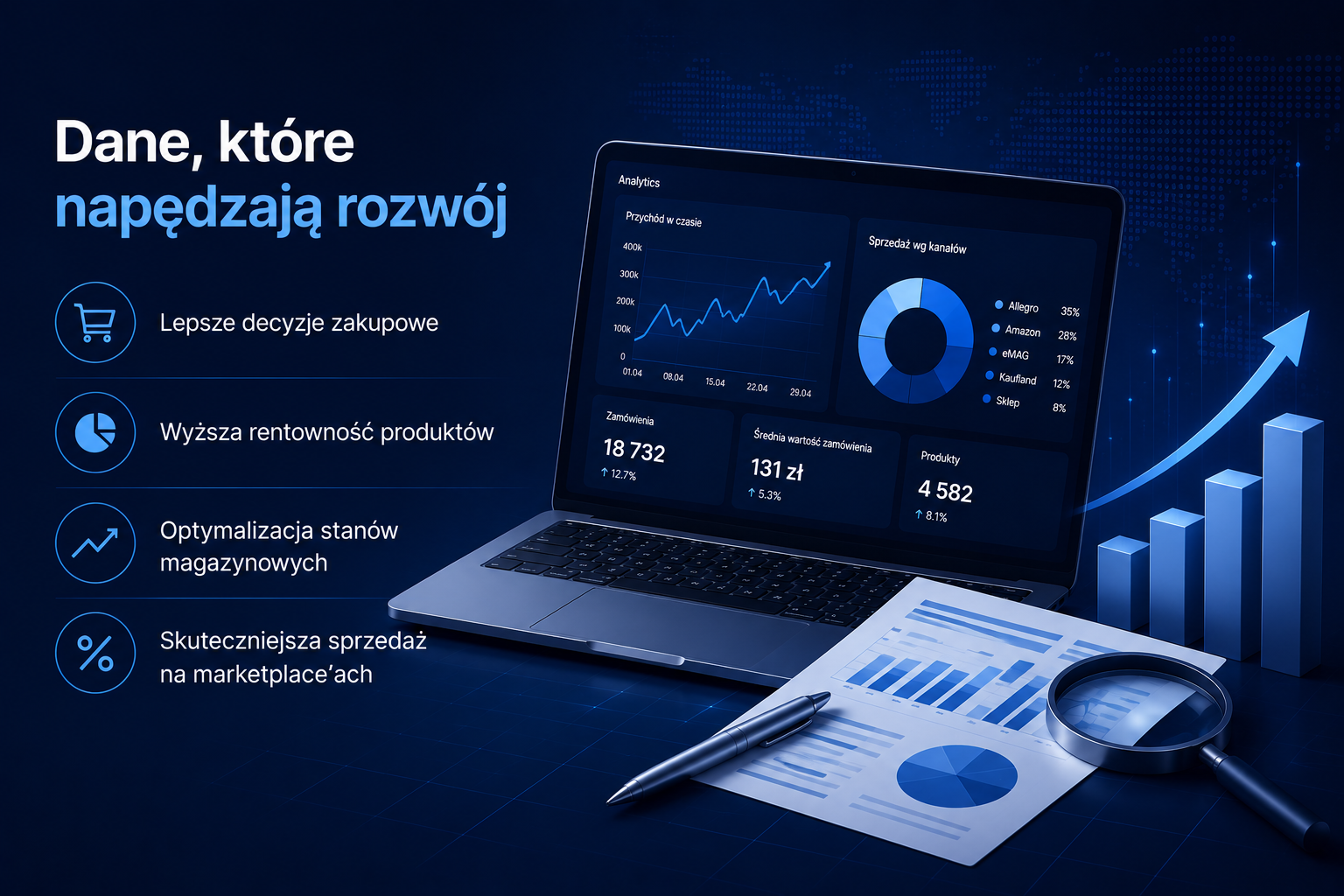
In practice, the greatest benefits come from regularly analysing a few key indicators:
- Product profitability
High sales figures do not always mean high profits. Often, the products that generate the highest turnover turn out to be the least profitable once advertising costs, marketplace commissions and logistics costs are taken into account.
- Sales trends
A sudden drop in sales of a particular product group may be the first sign of problems with the visibility of offers, pricing or competition.
- Stock turnover
Excessive stock levels tie up capital. Insufficient stock levels lead to lost sales. Analysing stock turnover enables better planning of purchases and deliveries.
- Marketplace effectiveness
Not every sales channel grows at the same rate. By analysing the data, you can quickly assess whether there is currently greater growth potential on Allegro, Amazon, eMAG or other marketplaces.
Base Analytics and the growth of overseas sales
Companies embarking on international expansion often focus solely on the number of orders. However, indicators relating to the profitability of individual markets are becoming far more important.
Sales in Germany, Romania or the Czech Republic can incur very different logistics, advertising and operational costs. Properly configured reports help to identify the most promising areas for growth more quickly.
Data is a competitive advantage
In 2026, it is becoming increasingly rare for a product alone to give a company a competitive edge. More and more often, it is the speed of decision-making that makes the difference.
Companies that use advanced analytics are able to respond more quickly to changes in competitors’ prices, seasonal sales patterns, stock issues or drops in conversion rates. This is precisely why analytics is becoming one of the most important elements of modern marketplace sales management.
Base Analytics enables you to turn scattered data into concrete business decisions. For companies expanding their sales across multiple platforms, this can mean not only greater control over their performance, but also the ability to scale sales more quickly without having to increase the number of staff responsible for reporting.
Blog author: Specialist in. e-commerce – Krzysztof Kryś
Date of publication: 17 June 2026.
 Polish
 English
 German
 Czech
 Hungarian
 Slovak
