


How do you sell on Kaufland Marketplace? A bTOP expert explains
Sales on marketplaces are now a key driver of international growth in B2C and D2C models. According to market reports, including an analysis Cross-Border E-commerce in Europe, cross-border sales on e-commerce platforms already account for over 50% of total e-commerce in Western Europe. One of the most important and accessible players in the region remains Kaufland Global Marketplace, bringing together millions of active shoppers in Germany, the Czech Republic, Slovakia, Poland, Austria, France, Italy, Spain and the Netherlands.
Although Kaufland is regarded as a marketplace that is easy to use, both from a technical perspective and in terms of day-to-day customer service, a safe and profitable entry onto this platform requires an appropriate strategy as well as an understanding of productisation principles and legal regulations.
Our Marketplace Specialist at bTOP, provides a practical guide to the platform, revealing a tried-and-tested implementation model, the fee structure and the most common operational pitfalls.
bTOP’s strategy: Which market should we start our expansion in?
Many retailers planning to sell cross-border try to launch straight away on the most challenging market of all: Kaufland.de in Germany. However, the bTOP agency’s experience shows that there is a much safer and more effective route.
Recommended implementation strategy: „We always recommend that our clients begin their roll-out with the Polish market (Kaufland.pl). By launching offers in Polish, you can refine your product catalogue, test your logistics processes and verify attribute mapping without any language barriers. Once the product database is stable, it is much easier to 'transfer’ the finished listings to other foreign markets (DE, CZ, SK and others), provided we wish to expand further.” – advises Paulina Kardaś, Marketplace Specialist at bTOP.
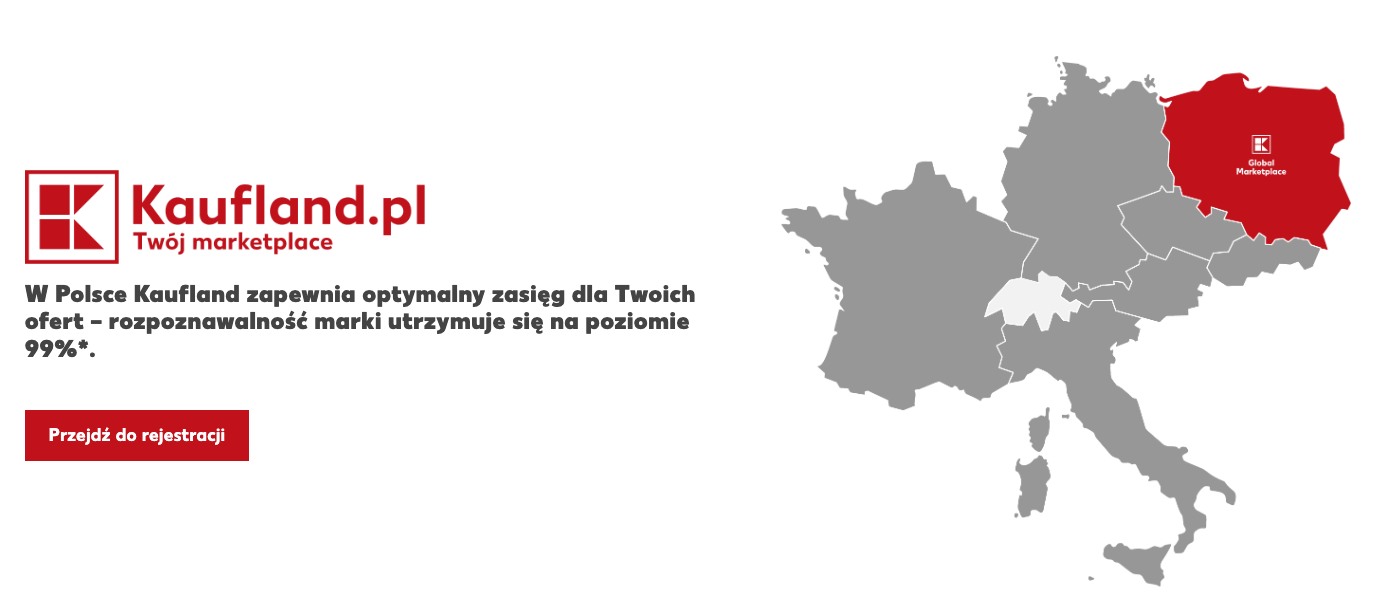
Registration, administrative procedures and changes to recycling regulations (August 2026)
To register on Kaufland Marketplace, you must have business entity status (CEIDG / KRS), a valid EU VAT number and a bank account registered to the company. However, environmental and legal requirements are the key elements of the verification process.
Important warning from a bTOP expert: „When setting up an account, the company must have a full set of the required documents and recycling numbers – including Polish ones” BDO or German LUCID i WEEE. This is particularly critical in the context of new, stricter recycling regulations, which came into force on 12 August 2026.
”The absence of verified registration numbers in the dashboard prevents sales from being activated or results in the account being blocked." – he explains expert.
Costs and fees on the Kaufland Global Marketplace
Kaufland has opted for a transparent billing model based on a fixed subscription fee and a commission on sales.
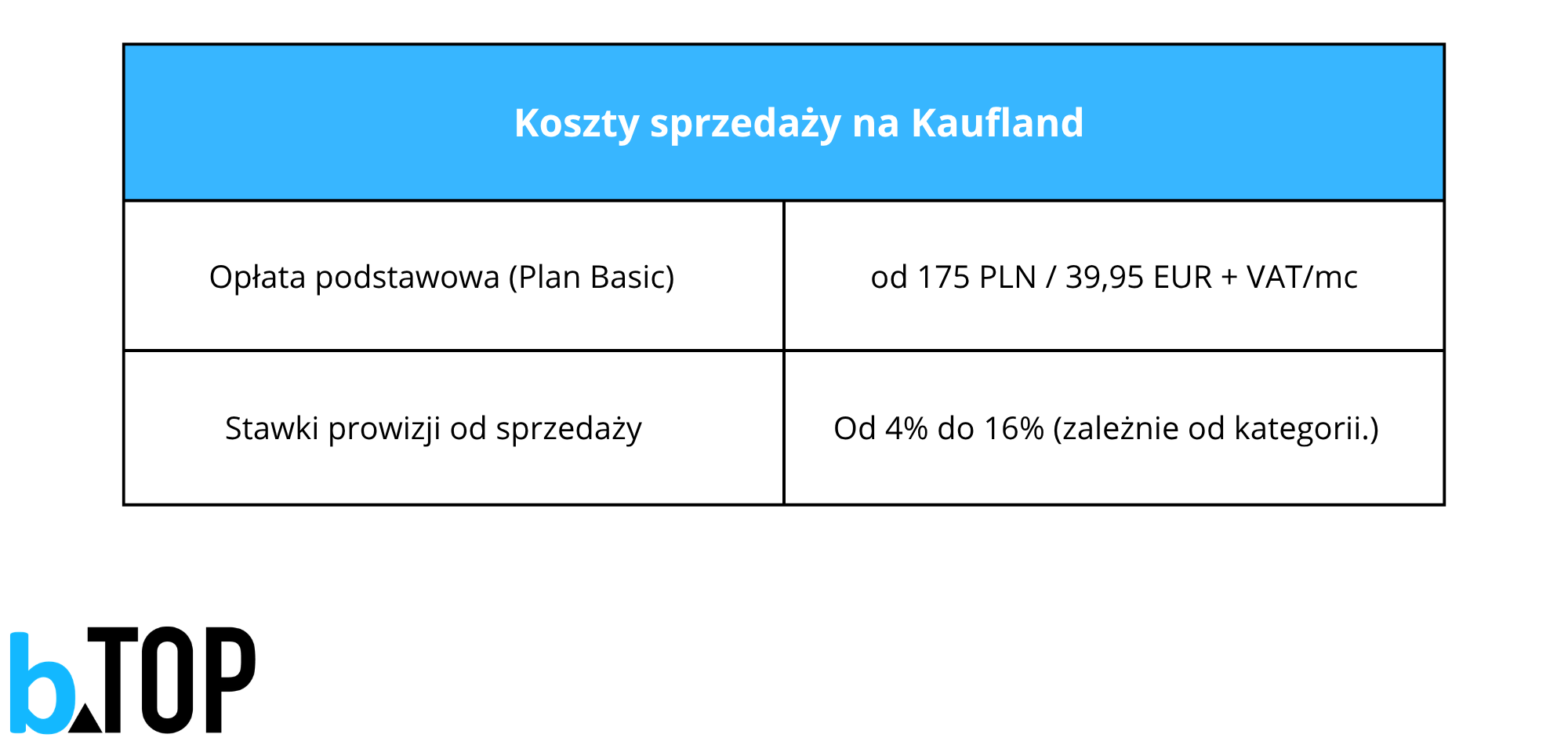
- Monthly subscription (Basic from 175 PLN / 39.95 EUR net): This involves managing sales across all of Kaufland’s domestic sales channels via a single account.
- Sales commission (success fee): The commission is calculated on the basis of total gross contract value (product price + delivery costs) and ranges on average from 4% (electronics) to 14–16% (accessories, clothing, home and garden).
Productisation and EAN codes – what should you watch out for?
Kaufland operates on the basis of product catalogue (productisation). This means that many companies can sell the same product under a single, shared product listing. These standards entail specific technical limitations, which our specialist highlights.
Paulina Kardaś from bTOP explains the specifics of card editions and EAN codes:
- Lack of full control over the product page:„If your product is linked to a card that already exists in the catalogue, it becomes very difficult to edit elements such as photos, descriptions or titles. The seller is not the sole owner of the listing. We can suggest changes to the details in the dashboard, but it is the system and Kaufland’s consultants who decide whether the request will be accepted.”
- The risk of errors arising from incompatible EAN codes:„When putting a product on the shelf, we must be 100% certain that our EAN is correct and accurate. If goods with an incorrect code (e.g. assigned to a different model) appear in the warehouse, Kaufland will link them to the wrong product card. As a result, the customer will buy the item, seeing a completely different product on the screen from the one they actually receive from us.”
- 'Product bundles’ error:„A common mistake is trying to list multipacks or sets (e.g. a pack of two items) under the EAN code for a single item. To the customer, such an offer will look like a single product, but at twice the price – the customer simply won’t realise that the offer is for two items.All product sets must, without exception, have their own new EAN codes.”
What does day-to-day operation involve, and where can I find more information?
Despite the rules on EANs and recycling issues, Kaufland is an extremely user-friendly platform that is easy to use on a day-to-day basis. The intuitive seller dashboard and the straightforward module for communicating with buyers ensure that order and customer handling runs very smoothly.
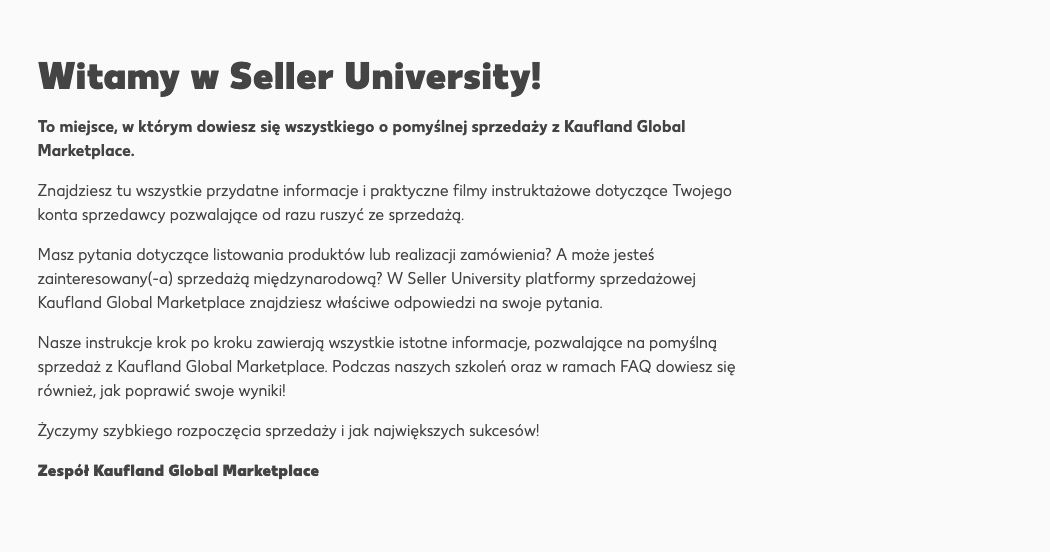
For retailers wishing to explore the technical aspects of the platform, Kaufland provides an official learning centre:
- Official materials and guides: Kaufland Seller University
Labels and parcel handling on Kaufland Marketplace
When planning logistics, it is worth bearing in mind one key technical difference between Kaufland and platforms such as Allegro, for example. At present, Kaufland does not offer the option to generate shipping labels via its control panel.
Expert advice from bTOP: „When setting up a shop on Kaufland, we must bear in mind that the platform will not generate a courier label for us directly from the order page. Therefore, the seller must have their own dispatch facilities in place straight away. The best approach is to sign a direct contract with a chosen carrier (e.g. DHL or DPD) or using a courier service such as BL Parcel. ”We efficiently import orders from Kaufland into the integration platform (e.g. Base), from which we generate labels for our own courier, and the system automatically sends the tracking numbers back to Kaufland.”
Promotional tools and marketing on Kaufland Marketplace
Simply listing products is only the first step towards success. To boost the visibility of products in this highly competitive market, Kaufland provides sellers with advanced marketing tools directly via the Seller Portal.
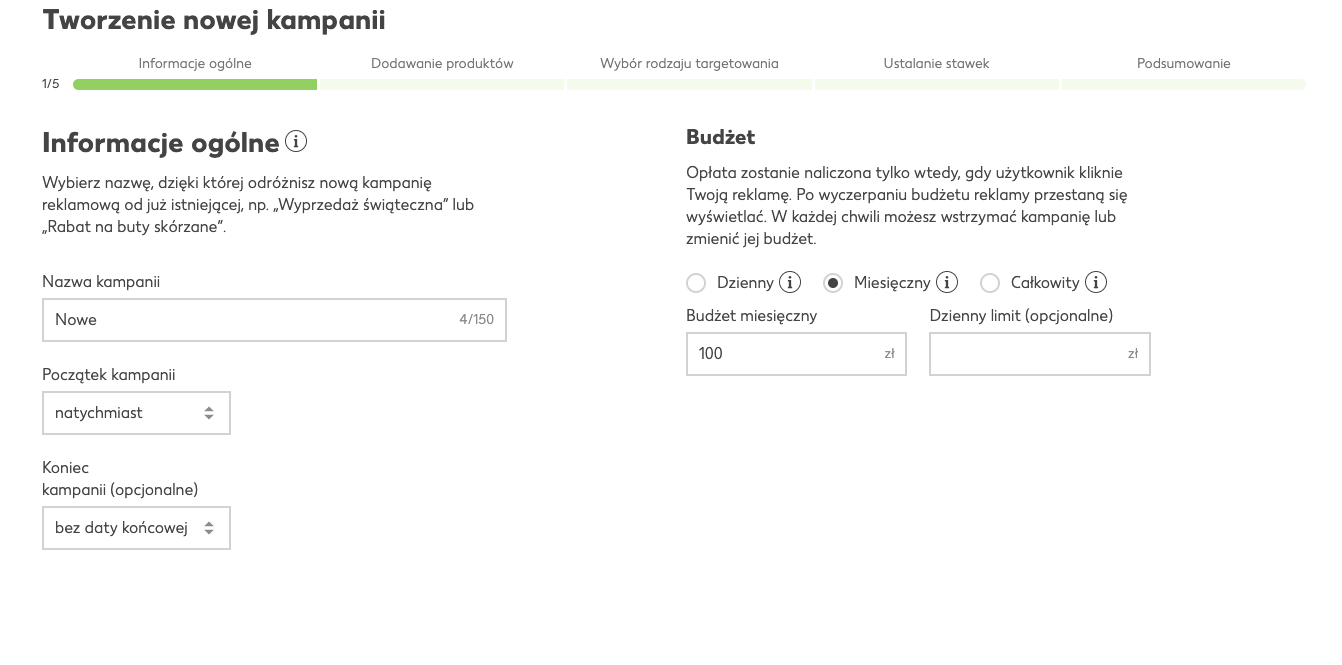
1. Advertising campaigns (Sponsored Product Ads)
- Sponsored Products: PPC (Pay-Per-Click) adverts that display selected products at the top of search results and on competitors’ product pages. The seller retains full control over their daily budget and cost-per-click rates.
- Sponsored Brands: A format designed for brand owners, allowing them to showcase their logo, a personalised header and a banner displaying up to three products at a time.
2. Promotional vouchers and discounts
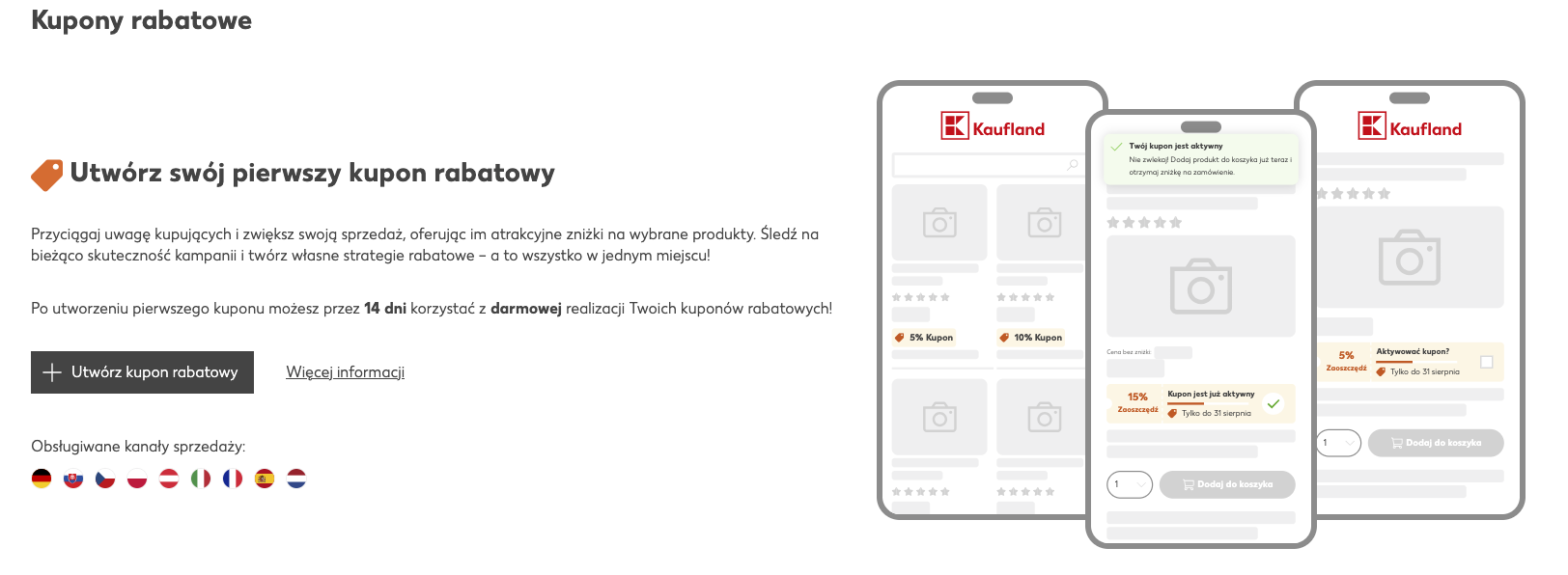
- Discount Coupons: One of the most effective ways to attract shoppers’ attention. Listings with an active voucher are highlighted with a special badge in search results, on category pages and on the product page.
- Payment based on results: Creating a voucher campaign is free, and a small service fee is charged only for vouchers actually redeemed by customers, which minimises the investment risk.
Selling on Kaufland Global Marketplace is an excellent step towards scaling up your e-commerce business. The key to success is careful preparation: from launching on the Polish market, through verifying the uniqueness of EAN codes and product sets, right through to meeting the current legal and recycling requirements due to come into force in 2026.
Not sure how to list your products correctly, or do you need help registering recycling numbers? Get in touch with the bTOP team of experts – we’ll help you navigate the whole process smoothly!
Blog author: Specialist in. Kaufland – Paulina Kardaś
Date of publication: 17 August 2026.
 Polish
 English
 German
 Czech
 Hungarian
 Slovak
