


The year 2026 marks a turning point for e-commerce. Artificial intelligence is no longer just a tool for marketing or customer service – AI is effectively taking over the start of the shopping process. What has been the norm for years („Google → shop → shopping basket”) is beginning to crumble. Shopping is increasingly taking place… in conversation. AI is taking over the start of the shopping process AI assistants are increasingly responsible for searching for, comparing and recommending products. Customers no longer need to browse through dozens of websites, analyse reviews or check price comparison sites. All it takes is a single question Read more

In 2026, e-commerce customers are more discerning than ever. An attractive product and a competitive price are no longer enough – today, the shopping experience is what determines which shop customers choose. It is this experience that builds loyalty, positive reviews and long-term relationships with the brand. As the Gemius E-commerce in Poland 2024 report shows, previous positive experiences are the most important non-financial factor influencing the choice of an online shop. The question is: does your e-commerce business meet these expectations? Customers expect positive experiences. The shopping experience is something far Read more
For e-commerce, 2026 will not be „just another year of campaign optimisation” or a minor evolution along the lines of faster deliveries, better UX and a little more automation. The biggest change will happen earlier – at the stage when the customer is only just beginning to think about making a purchase. Increasingly, the first place where consumers look for inspiration and guidance is no longer Google or a price comparison site. It’s generative tools: ChatGPT, Gemini, Claude or AI Mode. Customers aren’t „searching” for links – they’re seeking advice. And if in Read more
Until recently, many companies treated online sales as a simple process: you post a listing, run an advert, and „it all sort of works out”. Today, it’s clear that this phase is over. The market is maturing, competition is growing, and marketplaces are becoming an increasingly demanding environment. In 2026, it won’t be those who „sell everything” who come out on top, but those who have control over the process: data, product range, logistics and profitability. Marketplaces are no longer just an add-on. They are becoming the operating system for sales. By 2026, in many sectors, the marketplace will be the primary channel for acquiring Read more
Clicking „Buy and pay” does not mark the end of the customer journey. For the buyer, this is just the start: uncertainty sets in („Did it go through?”, „when will it be dispatched?”, „where will the parcel end up?”), whilst for the shop, the fulfilment process begins – a process which, without good communication, can lead to costs, returns and enquiries to customer service. One of the most underrated elements of this communication is the order confirmation email. Many shops treat it as a mere formality: a template from the platform, random content, automatically generated text with no structure. The result? The customer feels, Read more
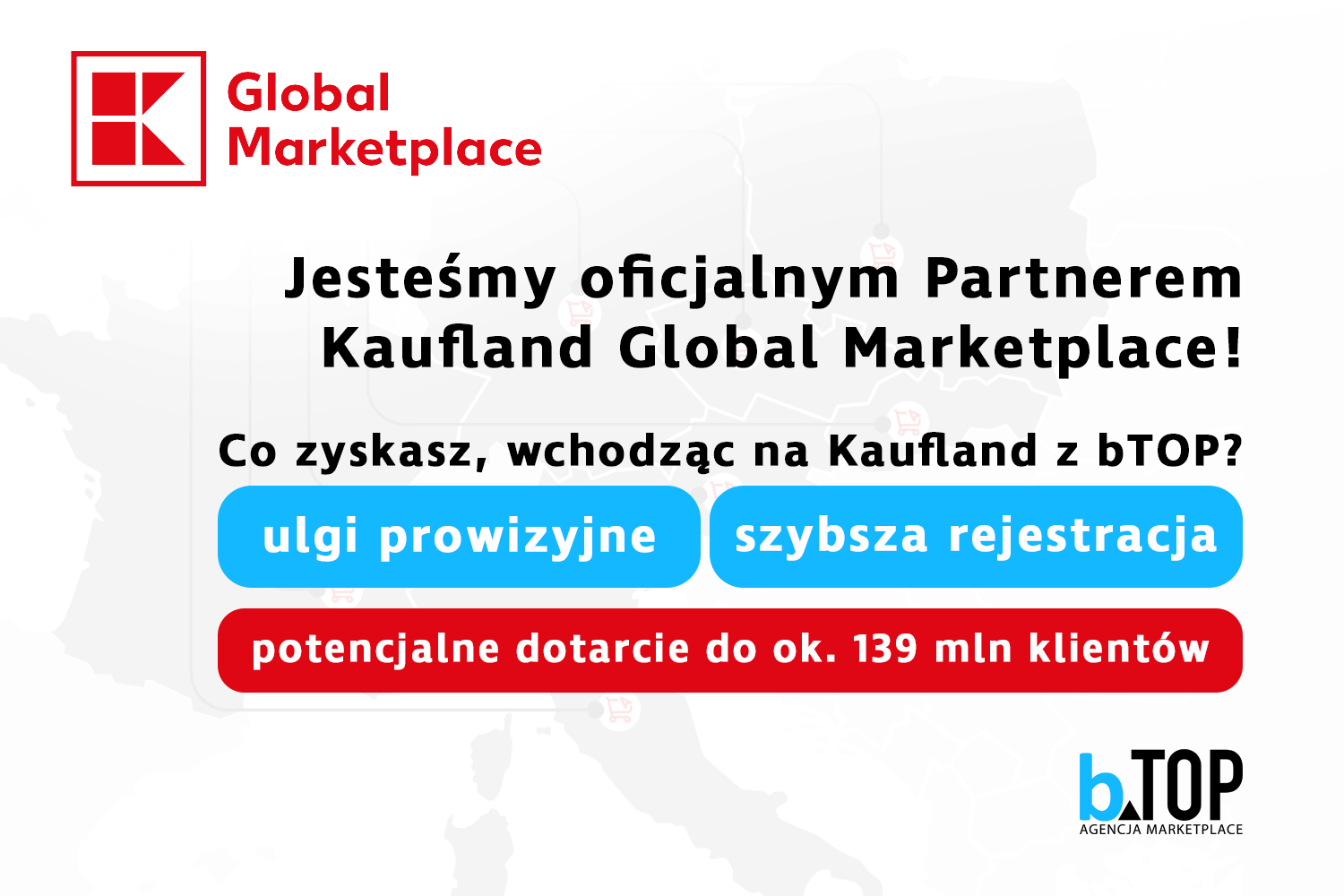
Kaufland is rapidly expanding its presence in the e-commerce market – by 2025 The platform is now present in as many as seven European countries: Germany, Poland, the Czech Republic, Slovakia, Austria, France and Italy, giving sellers potential access to around 139 million online customers. For many brands and sellers, this is the natural next step after Allegro. From now on, you can tap into this potential with additional support – bTOP Agency has become an official Agency Partner of Kaufland Global Marketplace. What does this mean for you in practice? 1. Read more

The way customers search for products online is changing faster than many retailers have realised. Increasingly, rather than typing a query into Google, users are asking AI-powered tools directly: GPT, Claude, Perplexity or Gemini. These tools answer questions such as „where’s the best place to buy”, „which shop is trustworthy” or „which option should I choose”. If your online shop doesn’t appear in these results, you’re effectively losing out on traffic and sales — even if you have Read more
Until now, cross-border e-commerce has been straightforward: you list your products on a marketplace, set up a courier service, set your prices and… sell abroad. From mid-2026, this scenario will begin to change. A new EU regulation, the PPWR (Packaging and Packaging Waste Regulation), is coming into force, tightening the rules on packaging and Extended Producer Responsibility (EPR). In short – if you do not meet your EPR obligations in a given country, you cannot sell there legally – including via marketplaces. What’s more, the platforms themselves Read more
Marketplaces such as Allegro, Castorama, Home and You, Kaufland, Media Expert and Amazon form the backbone of Polish and global e-commerce today. They offer a unique opportunity to reach millions of customers instantly, without having to build traffic from scratch. In such a dynamic environment, the key to success lies in the speed and efficiency with which you can launch your offering. This is precisely why choosing the right partner – a marketplace agency – is a strategic decision, and at the same time a trap into which some sellers unwittingly fall. In this article, we expose Read more

The e-commerce market is changing at a rapid pace, and with it, the requirements that sellers operating in foreign markets must meet are increasing. One area that is becoming particularly important is compliance with environmental regulations, such as EPR – Extended Producer Responsibility. This is a system that requires sellers to take responsibility for the entire life cycle of a product, from its launch on the market right through to its disposal. In France, these regulations are very strict and require sellers to have Read more
 Polish
 English
 German
 Czech
 Hungarian
 Slovak
